Showing posts with label visa and immigration. Show all posts

Sunday, March 4, 2012

Irish vote on EU treaty poses ‘crucial risk’


Ireland added another dose of uncertainty to the future of the European Union by setting plans for a referendum on the fiscal treaty designed to keep the debt-swamped continent intact.

The decision came Tuesday, the day after the German parliament approved a fresh €130-billion ($174-billion) bailout package for Greece and the same day that the EU, the International Monetary Fund and the European Central Bank (the so-called troika) approved the next tranche of bailout loans for recession-stricken Portugal.

Although the referendum was expected – the Irish constitution requires democratic votes on sovereignty-transfer decisions – it puts some doubt over Ireland’s ongoing membership in the 17-country euro zone.

If the Irish people reject the fiscal treaty, Ireland’s exodus from the euro zone is not out of the question. That’s because bailout funds from the European Stability Mechanism (ESM), the new rescue fund that comes into effect in July, cannot be extended to countries that are not part of the fiscal union treaty. Ireland, bailed out once already, may require more funds.

That’s why economists are not dismissing the Irish vote as trivial. “The Irish referendum will be another crucial risk to follow,” Morgan Stanley said in a note Tuesday.

Irish Prime Minister Enda Kenny said arrangements for the referendum would be made in the coming weeks. No date has been set for the vote, but various reports said June is the likely date. His government had hoped to avoid a referendum while the economy is fragile (though no longer technically in recession) and many voters are angry.

Ireland’s budget deficit, estimated at 9 per cent of gross domestic product this year, remains stubbornly high and unemployment is rising. The national jobless rate is 14.6 per cent and youth unemployment is more than 29 per cent. The national debt, meanwhile, is climbing relentlessly and is projected to hit almost 120 per cent of GDP by 2014, only slightly less than that of Italy.

The referendum has the potential to polarize voters. The fear in Dublin, and the EU, which had hoped the Irish government could get away with using legislation rather than a referendum, is that voters who are weary of the austerity measures will retaliate with a “No” vote.

Ireland has rejected two EU treaties in the past, though they were approved in follow-up referendums. The Irish rejected the 2008 Lisbon treaty governing the EU and its powers, only to endorse it in a vote a year and a half later.

Mr. Kenny was quick to launch his “Yes” vote campaign on Tuesday with the message that endorsing the fiscal union treaty would translate into a stronger economy. “I am confident that the Irish people will do what is necessary,” he told parliament. “In the end, what this will come down to is a vote for economic stability and economic recovery.”

In December, Irish Finance Minister Michael Noon said a referendum on the fiscal treaty would, in effect, be a referendum on continued membership in the euro zone. The fiscal treaty was endorsed last month by 25 of the EU’s 27 countries (Britain and the Czech Republic opted out).

The treaty would enforce stricter budget discipline and impose fines on countries that exceed their debt and budget deficit limits. It would also allow the EU to review budgets. The treaty was championed by German Chancellor Angela Merkel, who has argued that only German-style fiscal discipline and austerity can prevent a second debt crisis.

A “Yes” vote in the Irish referendum is not assured. A recent opinion poll determined that 40 per cent of the Irish would support the fiscal treaty, with 36 per cent against and the rest undecided.

If the Irish vote “No,” the EU’s fiscal treaty would not necessarily be derailed. It could be launched with as few as 12 countries ratifying it.

News of the Irish referendum initially rattled the markets, but they bounced back quickly. In London, the FTSE-100 index rose and the euro gained 0.4 per cent against the dollar, reaching $1.345.

In spite of the continued deterioration of the Greek, Portuguese and Spanish economies, investors are encouraged by the second Greek bailout, combined with the debt “haircut” that will reduce Greece’s debt by more than €100-billion, and by stabilizing or rising consumer and business sentiment in Germany and some other EU countries.

Student Finds U.S. Immigration Laws Tough To Navigate


NORTH MIAMI (CBS4) – The North Miami High School Valedictorian fighting to stay in the United States has hired a new attorney.

On Friday, Daniela Pelaez, 18, retained Nera Shefer to fight a potential deportation back to her native Colombia. On Monday an immigration judge granted Pelaez an order for voluntary deportation.

“As part of the strategy of the case sometimes we as lawyers sometimes recommend to take this. Yes it is something that we have to request,” said Shefer. “But its not offered to everybody and sometimes we do take that in lieu of a deportation order. But at the end of the day, it could have the same effect and it appears in Daniela’s case, it would have that same effect if nothing is done immediately.”

The immigration judge on Monday denied Pelaez’s request for a green card, surprising immigration advocates like Cheryl Little.

“She’s entitled to a green card… it’s my understanding through other means,” said Little, Executive Director of Americans for Immigrant Justice. “I think she has a very compelling case. I think at the end of the day she’ll get it.”

Right now Pelaez has a number of legal options. Immediately her lawyer said she will file an appeal. That process could take two to four years. In the interim, Shefer said Daniela should be able to stay in the United States.

She can also take the route of filing for citizenship under her father. He recently became a permanent resident under his son, Daniela’s brother. Johan Pelaez is a U.S. citizen because of his service in the U.S. Army.

“We are really against the clock,” said Shefer. “We are trying to do everything that is available to us under the law in order for her to stay here permanently.”

Thursday, March 1, 2012

Air travel may help explain clots in marathoners

(Reuters Health) - Marathon runners who travel by air to the race may end up with higher blood levels of molecules that have been linked to clots, a new study shows.

That doesn't mean flying is actually likely to trigger a blood clot in endurance athletes, researchers say, or that air travel is a no-go. But it does suggest a possible explanation for the rare but mysterious reports of clots in otherwise healthy marathoners who flew to a race.

"It seems that the two activities could have a compounding effect when they are carried out back-to-back," said Beth Parker at Hartford Hospital in Connecticut, who led the research.

Blood clots usually form in veins, and can be dangerous if they break off and block blood supply to the lungs or heart.

The Centers for Disease Control and Prevention estimates that between one and two per 1,000 Americans experience a life-threatening blood clot each year. The elderly and those with genetic risk factors are at increased risk.

In the new study, published in the American Journal of Cardiology, Parker and her colleagues took blood samples from 41 healthy non-smokers who participated in the 2010 Boston Marathon.

Twenty-three of them lived more than a four-hour plane flight away, while 18 participants -- the comparison group -- lived within a two-hour drive of Boston. The researchers collected blood after the runners landed in Boston, immediately after the marathon, and again when the participants were back home the next day.

After returning home, six people in the air travel group had elevated levels of a substance called D-dimer, which has been used as a sign of possible blood clots. By contrast, none of those who lived close to Boston did.

Air travel is known to double or triple the risk blood clots in the veins of the legs, called deep vein thrombosis, according to Parker.

And endurance exercise, such as marathon running, may also raise the number of blood molecules that aid clotting.

What the elevated D-dimer levels meant is unclear. None of the athletes showed actual symptoms of deep vein thrombosis, such as leg pain or swelling, shortness of breath or rapid heart rate.

The researchers also found that older athletes had significantly higher levels of an inflammatory blood compound that could be associated with heart attack risk, regardless of whether they flew to the marathon or not.

One expert who wasn't part of the study cautioned that none of the molecules the researchers looked at has been shown to clearly identify individuals at increased risk of clots or heart disease.

"I wouldn't let these findings alarm runners traveling to marathons," Dr. Kenneth Bauer of Beth Israel Deaconess Medical Center in Boston told Reuters Health by email.

Parker agrees that while the research suggests marathon running and air travel to get to marathons could contribute to a slightly increased risk of blood clots or other cardiovascular events, the benefits of endurance running far outweigh the small risks for most people.

Simple precautions will reduce the risk of blood clots while flying, said Dr. Mary Ann Bauman, medical director for women's health at INTEGRIS Health in Oklahoma City.

She recommends staying hydrated, wearing loose clothes, and not cross your legs for long periods of time. Walking around the cabin every one to two hours and wearing compression stockings can help too, she Told Reuters Health.

One of the researchers on Park's team consults for AstraZeneca, which makes the cholesterol-lowering drug Crestor, and a number of other major pharmaceutical companies that make heart drugs.

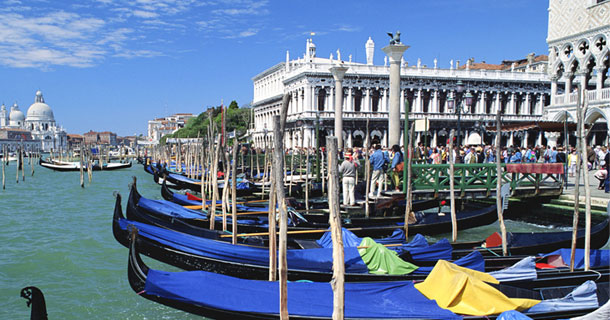
Travel advice: cheap ferry crossings to France

Starting to plan your summer holiday to France? Here's how to find the best route across the water – and the lowest fares.


It's all change on the Dover-Calais ferry route. Following the demise of Sea France in November, a new service was started by DFDS Seaways two weeks ago (February 17). It's a joint operation with LD Lines (which also runs the Portsmouth-Le Havre and Newhaven-Dieppe routes) and it supplements DFDS' Dover-Dunkirk service. Initially there is only one ship on the route, but launch fares have been pitched very competitively at £58 return for a car plus passengers.

This very competitive opening offer is not the only good news for passengers. The new service ensures healthy competition on a route where fares have been suppressed at historic lows for several years now. It also keeps the pressure on prices on the longer crossings to Normandy and Brittany.

With airfares creeping up because of oil price rises and higher departure taxes, self-drive holidays in France haven't looked so attractive for a long time. So here is a guide to your choices when crossing the Channel this summer. I have quoted the cheapest returns currently available for a car plus passengers (usually up to nine people, but sometimes less – check before booking). Prices depend on demand, and may more than double for peak summer crossings.

For seasonal services I have indicated the month for which the fare applies. All frequencies are the maximum number of return crossings each time in peak season. See below panel for a guide to finding the cheapest fares.

Court to rule later on Georgia, Alabama's anti-illegal immigration laws

A federal appeals court in Atlanta announced Thursday that it would wait until after the U.S. Supreme Court rules on Arizona’s anti-illegal immigration law before it acts on similar statutes in Georgia and Alabama, keeping parts of those measures on hold for months to come.


Judge Charles Wilson of the 11th Circuit Court of Appeals made the announcement at the start of a three-hour-long hearing on parts of Georgia and Alabama’s laws.

As dozens of people loudly protested against those laws outside the downtown courtroom, Wilson said his three-judge panel agreed to wait until the higher court rules because some of the issues are similar in their cases.

The Supreme Court is expected to take up Arizona’s law next month and rule by the end of June. A lower court put two key parts of Georgia’s law on hold in June following a legal challenge brought by the American Civil Liberties Union and other civil and immigrant rights groups. Georgia is appealing that lower court’s decision to Wilson’s panel.

At issue in the courts is how far states can legally go in combating illegal immigration. Officials in Alabama, Arizona, Georgia, South Carolina and Utah have enacted similar anti-illegal immigration laws in recent years, saying they must act to protect jobs and taxpayer-funded resources because the federal government has failed to seal the nation’s borders.

Opponents of these measures say they are divisive and unconstitutional and complain they are tearing families apart, driving migrant workers away and damaging states’ economies.

“The panel has conferred preliminarily and we have agreed not to issue any opinions in this case until the Supreme Court has decided the Arizona case,” Wilson said Thursday, “since I believe that some of these provisions of both the Georgia law and the Alabama law are very similar to the provisions in Arizona.”

Wilson and the other two judges then proceeded to ask many probing questions of the attorneys representing Georgia and Alabama, including whether their measures interfere with the federal government’s authority to regulate immigration and manage foreign relations.

Wilson singled out a provision in Georgia’s law that would authorize state and local police to investigate the immigration status of certain suspects and detain those who are determined to be in the country illegally and take them to jail.

The judge asked what would happen if all 50 states adopted statutes similar to Georgia’s. Specifically, he asked how that would affect federal immigration officials who are required to respond to queries from local police about the legal status of suspects.

“I wonder what the increased burden would be on the Department of Homeland Security to respond to all these data-gathering requests?” he asked. “You would have to create an entirely new bureaucracy, wouldn’t you, just to respond to these requests?”

Senior assistant Attorney General Devon Orland pointed out Georgia’s law makes it optional for police to do immigration status checks. She also denied the measure is preempted by federal law.

“What the plaintiffs are talking about is -- their definition of harm is they are more likely to get caught,” she said. “More likely to be caught is not sufficient for standing, it is not sufficient for harm and it is not sufficient to show preemption.”

The judges then turned to parts of Alabama’s law, including a provision that that would require public school officials to determine the immigration status of their students. The Obama administration is suing to block that law. And in October, the appeals court temporarily put that provision on hold.

Judge Beverly Martin expressed concerns about how information about students’ immigration status could be used. She pointed out that Alabama must turn over such information to federal authorities if they ask for it, potentially making it possible for students to be deported. The Supreme Court has ruled that school districts must educate all children regardless of their legal status.

“Once they declare themselves, doesn’t that interfere with their constitutional right to a basic public education, which has been declared by the Supreme Court, as you know?” she asked.

Moments later, Wilson asked whether the law is a “scare tactic.”

Alabama officials denied that and said the law would not deny students their constitutional rights. Prim Escalona, a deputy solicitor general for Alabama, said federal officials are the ones who determine who is deported. She added collecting information about the immigration status of students could help Alabama officials make school spending and policy decisions.

“Perhaps they collect this data and the numbers are low and it informs the public debate and they say, ‘Well, maybe we don’t need certain laws or maybe we do need certain policies,’” Escalona said.

Near the end of Thursday’s hearing, Cecillia Wang, director of the ACLU Immigrants’ Rights Project, pressed the court to not wait and instead issue an injunction against several parts of Alabama’s law – also called House Bill 56 – that have not been put on hold. Among those provisions is one that would require police to investigate the immigration status of certain suspects.

Wang said some of the plaintiffs in the case are seeking legal status in the United States and would be “subject to police inquisition if they should be stopped for a traffic violation. They are subject to detention, arrest and indeed criminal prosecution.”

“The plaintiffs that we represent in this case are suffering an ongoing harm because of HB56 and these particular provisions,” she said.

Georgia Attorney General Sam Olens, who sat by Orland’s side at Thursday’s hearing, said it makes sense for the appeals court to hold off on acting on Georgia’s law until the Supreme Court rules on Arizona’s statute since similar issues are at play in both cases. He defended Georgia’s law in an interview during a break in the proceedings.

“The states,” he said, “would not be passing these laws if the federal government did its job.”

Twitter Delicious Facebook Digg Stumbleupon Favorites More

 
Design by Free WordPress Themes | Bloggerized by Lasantha - Premium Blogger Themes | GreenGeeks Review