
Showing posts with label us immigration work visa. Show all posts

Friday, June 22, 2012

Obama Defends Himself On Economy, Immigration


President Delivers Case For Re-Election

LAKE BUENA VISTA, Fla. (CNN) -- President Barack Obama delivered an impassioned case for his re-election on Friday while defending his record on the economy and his newly stated immigration policy.

He highlighted the new stance, unveiled last Friday, as "the right thing to do" and took aim at his Republican rival over his previous statements regarding the DREAM Act that would have provided a permanent legal pathway for children of illegal immigrants brought to the United States as young people.

"Giving them a reason to hope, that was the right thing to do," Obama told the crowd at the National Association of Latino Elected and Appointed Officials, about his announcement last Friday.

He said Congress should still pass the DREAM Act, which failed in Congress in 2010, and called out Romney for saying earlier in the primary process that he would veto the bill if it crossed his desk.

"He said he would veto the DREAM Act and we should take him at his word," Obama said of the presumptive Republican presidential nominee. "I'm just saying," he added to laughter.

The president specifically pointed to proposals that have helped those in the Latino community, pointing to the expansion of Pell grants, small business tax cuts and health care reform, and contrasted them with those of Republicans who he said believe in a top down system.

"That's how they plan to do it, and I think they're wrong," Obama said.

Romney spoke before the same group Thursday. He called the president's recently announced policy a "temporary measure that he seems to think will be just enough to get him through the election." As president, he said, he "won't settle for stop-gap measures" and would instead work with those on both sides of the aisle to find a "long-term solution." But he also did not say what he would do regarding the policy if elected.

His immigration policy, as further laid out in the speech, would include lifting caps on skilled worker visas, speeding up the process of applications for temporary agricultural work visas, reallocating green cards to those looking to keep their families together, green cards for those who receive an advance degree and a legal pathway to citizenship for anyone serving in the military.

The president last addressed the conference in 2008 as the Democratic presidential nominee. At the time he called for immigration reform that would "secure the borders" and "punish employers who exploit immigrant labor."

"That is a priority I will pursue from my very first day," Obama said in June of 2008.

However, he has failed to put forward a comprehensive immigration reform plan while in the White House. He backed the DREAM Act - legislation that would provide a legal pathway to citizenship for children of illegal immigrants - but it ultimately failed in Congress in 2010. Critics argue Obama did not make the issue a priority while Democrats controlled both Congressional chambers. Supporters have blamed a gridlocked Washington for failure to fully address the issue and point to successes within the Department of Homeland Security in deporting those in the country who had run-ins with the law.

It is those successes, the Obama administration has said, that led to the president's policy shift toward undocumented young people currently residing in the United States, now that there are more resources available.

The new directive under existing law, unveiled one week ago, will stop deporting young people in the United States illegally if they meet certain criteria. Those who met the requirements could then apply for a work permit for that time period. The applicants must be under the age of 30 and brought to the U.S. before the age of 16, have been in the country for at least five consecutive years, have no criminal history, graduated from a U.S. high school or earned a GED or served in the military.

On Friday, Obama said he remains ready to pass the DREAM Act and accused Republicans of playing politics.

"My door has been open for three and a half years, they know where to find me," Obama said.

Romney's campaign capitalized on the president's 2008 address to NALEO, saying economic promises he made during that speech have gone unfulfilled.

"In 2008, Candidate Obama promised NALEO he would create new jobs and end the housing crisis," Romney campaign spokeswoman Amanda Henneberg wrote in a statement. "Four years later, President Obama is back asking for more time. No election-year speech can cover up the President's job-killing policies that have led to 11% Hispanic unemployment and millions of Hispanics living in poverty. On Day One, Mitt Romney will take our country in a new direction and get our economy back on the right track."

Despite the announcement's close proximity to Election Day, members of the current administration have insisted the move was not political and instead the just and correct step for those hoping to excel and contribute to America.

But it is impossible to ignore the implications for November. Obama won 67% of Latino support in 2008 to Sen. John McCain's 31%, in a year when they represented a larger share of the voters than in 2004. The biggest breakthrough was in Florida, where he won 57% of the Latino vote, backed by strong showings among men, women and young people, in a state that historically supported Republican presidential candidates.

The Hispanic population in Florida and nationwide has continued to boom in recent years. They make up 22.5% of the population in the Sunshine State, according to 2010 census data, up from over 16% of the population in 2000. Although the voter registration figures among the demographic have increased, the jump has not matched the population spike.

More than 21 million Latinos will be eligible to vote nationwide this November, but just over 10 million are registered to vote, a disparity the Obama re-election campaign and that of Mitt Romney are hoping to close.

Recent polling shows a majority of likely voters support the president's policy shift on immigration, welcome news no doubt for the campaign that, like Team Romney, has increased voter outreach to Latino voters, particularly in competitive presidential election states with larger concentrations of eligible Hispanic voters, including Florida, Nevada, Colorado, Arizona and New Mexico.

Obama campaign officials predicted the Latino population would represent the same percentage of the vote in 2012 that they did in 2008, at 9% of the electorate, but that more in the voting block would turn out to vote.

Both campaigns have released a consistent string of Spanish language television ads and web videos, in large part targeting battleground states.

Invoking familiar campaign themes from 2008, Obama used Friday's address in part to energize influential Latino leaders.

"Whether our ancestors arrived on the Mayflower or brought here on slave ships, whether they signed in at Ellis Island or they crossed the Rio Grande, their diversity has not only enriched this country, it helped build the greatest economic engine the world has ever known," he said.

Copyright CNN 2012
Sunday, March 4, 2012

Irish vote on EU treaty poses ‘crucial risk’


Ireland added another dose of uncertainty to the future of the European Union by setting plans for a referendum on the fiscal treaty designed to keep the debt-swamped continent intact.

The decision came Tuesday, the day after the German parliament approved a fresh €130-billion ($174-billion) bailout package for Greece and the same day that the EU, the International Monetary Fund and the European Central Bank (the so-called troika) approved the next tranche of bailout loans for recession-stricken Portugal.

Although the referendum was expected – the Irish constitution requires democratic votes on sovereignty-transfer decisions – it puts some doubt over Ireland’s ongoing membership in the 17-country euro zone.

If the Irish people reject the fiscal treaty, Ireland’s exodus from the euro zone is not out of the question. That’s because bailout funds from the European Stability Mechanism (ESM), the new rescue fund that comes into effect in July, cannot be extended to countries that are not part of the fiscal union treaty. Ireland, bailed out once already, may require more funds.

That’s why economists are not dismissing the Irish vote as trivial. “The Irish referendum will be another crucial risk to follow,” Morgan Stanley said in a note Tuesday.

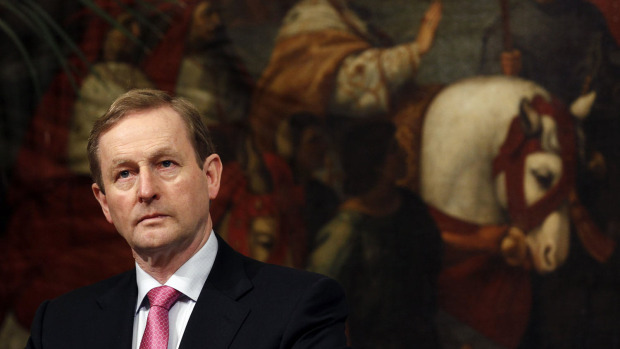
Irish Prime Minister Enda Kenny said arrangements for the referendum would be made in the coming weeks. No date has been set for the vote, but various reports said June is the likely date. His government had hoped to avoid a referendum while the economy is fragile (though no longer technically in recession) and many voters are angry.

Ireland’s budget deficit, estimated at 9 per cent of gross domestic product this year, remains stubbornly high and unemployment is rising. The national jobless rate is 14.6 per cent and youth unemployment is more than 29 per cent. The national debt, meanwhile, is climbing relentlessly and is projected to hit almost 120 per cent of GDP by 2014, only slightly less than that of Italy.

The referendum has the potential to polarize voters. The fear in Dublin, and the EU, which had hoped the Irish government could get away with using legislation rather than a referendum, is that voters who are weary of the austerity measures will retaliate with a “No” vote.

Ireland has rejected two EU treaties in the past, though they were approved in follow-up referendums. The Irish rejected the 2008 Lisbon treaty governing the EU and its powers, only to endorse it in a vote a year and a half later.

Mr. Kenny was quick to launch his “Yes” vote campaign on Tuesday with the message that endorsing the fiscal union treaty would translate into a stronger economy. “I am confident that the Irish people will do what is necessary,” he told parliament. “In the end, what this will come down to is a vote for economic stability and economic recovery.”

In December, Irish Finance Minister Michael Noon said a referendum on the fiscal treaty would, in effect, be a referendum on continued membership in the euro zone. The fiscal treaty was endorsed last month by 25 of the EU’s 27 countries (Britain and the Czech Republic opted out).

The treaty would enforce stricter budget discipline and impose fines on countries that exceed their debt and budget deficit limits. It would also allow the EU to review budgets. The treaty was championed by German Chancellor Angela Merkel, who has argued that only German-style fiscal discipline and austerity can prevent a second debt crisis.

A “Yes” vote in the Irish referendum is not assured. A recent opinion poll determined that 40 per cent of the Irish would support the fiscal treaty, with 36 per cent against and the rest undecided.

If the Irish vote “No,” the EU’s fiscal treaty would not necessarily be derailed. It could be launched with as few as 12 countries ratifying it.

News of the Irish referendum initially rattled the markets, but they bounced back quickly. In London, the FTSE-100 index rose and the euro gained 0.4 per cent against the dollar, reaching $1.345.

In spite of the continued deterioration of the Greek, Portuguese and Spanish economies, investors are encouraged by the second Greek bailout, combined with the debt “haircut” that will reduce Greece’s debt by more than €100-billion, and by stabilizing or rising consumer and business sentiment in Germany and some other EU countries.

Thursday, March 1, 2012

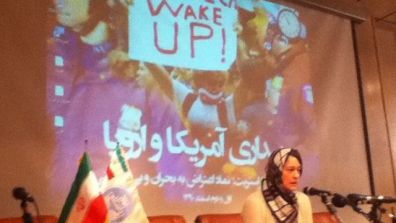
US professors travel to Iran to discuss Occupy Wall Street movement


The Occupy Wall Street movement may be losing its spotlight in the United States, but it's gaining attention in Iran, where a handful of American professors recently traveled to attend a conference focusing on the anti-capitalist protests.

"The discourse (in Iran) seems to be veering from 'Down with America!' to 'Down with the 1 Percent!'" said Heather Gautney, a self-described "Occupy Wall Street activist" and a sociology professor at Fordham University in New York. "In my view, this is quite a welcome development, and speaks to Iranians' affection for Americans despite all the political conflict."

Gautney was one of four U.S. professors last week to attend the two-day conference at Tehran University, in a country whose people -- despite any possible dissatisfaction -- are not in a position to take to the streets, as she described it. Consequently, she said, Iranian professors and students view the Occupy movement as "an object of study," not something to emulate anytime soon.

When she and the other professors were first invited to the conference, they were worried about the organizers' motivations, Gautney admitted. But after seeing a list of about 30 questions that would be posed to them, "it seemed like a very legitimate kind of project," she said.

In particular, organizers wanted to hear the professors speak about: What is the significance of the movement? How did it come about? Who are the protagonists? What are the goals?

"I got the sense that they were trying to confirm impressions that they had, confirm things that they had read in the press, in part so that they could integrate into their own and also into their classroom," Gautney said.

Nevertheless, government-controlled media in Iran didn't miss an opportunity to highlight the American professors' presence in Tehran. In an English-language report posted online, Iran's PressTV offered this headline from the conference: "Experts: Occupy Wall Street likely to topple US administration."

But no one in the report, including the American professors, said any such thing.

Two weeks earlier, Iran's PressTV posted a report from another Occupy Wall Street conference in Tehran, during which American religious activists said the Occupy movement "will redesign the world order."

A man identified as Imam Abdul Alim Musa from the Masjid al-Islam mosque in Washington said Occupy activists "feel that all of us are part of the 99 percent" and "are against one government killing scientists, engineers, peaceful people," referring to the recent assassination of an Iranian scientist working on Iran's nuclear program.

"So they are naturally against Zionism," Musa said in the report, provided to Fox News by the Washington-based Middle East Media Research Institute. "The monster today is global Zionism."

In the United States, some critics of the Occupy movement have pointed to several videos from protests featuring what the critics describe as anti-Semitic language.

Gautney said she would "vehemently disagree" with any such comments, saying the only enemy of Occupy Wall Street is inequality.

"I find (the imam's) claim quite disturbing and an awful attempt to use (the movement) as a pawn in religious conflicts of which is it not at all a part," she said.

As for the conference she attended, Gautney acknowledged a few presentations were "highly rhetorical," including one mentioning "the imperialism" of Europeans dating back to the days of Christopher Columbus. And, she said, "time and time again" Iranians asked if the Occupy movement is a signal "that there are problems with the liberal, democratic" system.

But she indicated she disagreed with any sentiments suggesting the demise of the U.S. government.

"I don't think any of us think that Occupy Wall Street is signaling the death of capitalism," she said. "(But) we certainly can see that it is signaling some problems in the system. ... We have a deeply unequal social and political system, and part of that is due to severe power inequalities."

Still, even when Gautney disagreed with some of the statements made at the conference, she wasn't always comfortable voicing her opinion.

"I felt my role there was to maintain my positions as representing the movement," she said. "To come into another country and start advising them on how to do things -- especially (since) I have no education in Islamic history, I have no real understanding of the society -- it would have been foolish and irresponsible. I didn't see my role as one of taking up the fight, spreading the Occupy Wall Street to Iran."

What's more, voicing some of her opinions could have been dangerous.

"You don't know what the level of control is, so you don't want to go places where you could get yourself into trouble," she said. "There's no U.S. Embassy there. There's no support mechanism. So I didn't feel like I had the freedom of speech to veer away from my ... talk about the movement."

Asked why she would attend a conference at which she couldn't speak her mind, Gautney said, "What you can do is give them real information about the movement."

She said one "misperception" among Iranians is that that U.S. media coverage of the Occupy movement "was very negative," and that news outlets " failed to report on a lot of what had been going on."

"We had an opposite impression," Gautney said of herself and her fellow activists. "From within the U.S., it was up and down, but for the most part there was a lot of positive reporting and a lot of media presence."

So, she said, she was able to "correct" a "complete misperception of what's going on."

In addition, Gautney was able to answer Iranians' questions about life in the United States, whom she described as "incredibly curious about American society."

In particular, Gautney said, Iranians were interested in the "mechanisms" of the U.S. economic crisis, including debt and the housing market's collapse. At the same time, many female students asked her questions such as: What does it mean to be a single parent? Do women have abortions? And, Why are so many teenage girls having children?

Conversations about the Iranian regime were "limited" because, in Gautney's assessment, Iranians "have to tow a line there" and "weren't really turning (the) lens inward."

In addition, she said United Nations sanctions against Iran are "really hitting the poor and middle-class people" and undercutting opportunities for uprising from within.

"It sort of positions people against the West rather than allowing them to find spaces of dissent within their own country," Gautney said. "It sort of unifies the country, and it gives them something to unify around."

A new immigration point system for Canada starts in 2012

A revised points-based selection grid will be introduced to favour young immigrants with strong language skills, says federal Immigration Minister Jason Kenney.

Prospective immigrants in licensed professions will need to be pre-assessed to ensure they are likely to get certification in Canada before their applications are processed, Kenney said in Toronto at the annual gathering of Metropolis, an immigration research network that is about to lose its federal funding.

Currently, immigration applicants can skirt the mandatory language requirement by entering through the Provincial Nominee Program, which allows provinces to select immigrants with job offers from local employers.

Under the new grid, to be introduced by the end of the year, Kenney said provincial nominees will face a higher bar as well, because research has shown that language proficiency enhances social and economic integration in the long run.

“We must make better choices. We must select immigrants who have the skills and traits we know will lead to their success, and qualifications that are already recognized in Canada, or can be recognized in a short time,” he said.

While the federal government does not plan to require spouses of applicants in the federal skilled worker program to undergo language tests, Kenney said they will be awarded more points if their spouses are proficient in English or French.

Calling the revised system “more flexible and intelligent,” Kenney said a welder with a job offer in Prince George would not face the same expectations with regard to language skills as someone expecting to work as a physician.

Plans are also underway to change the federal immigration programs for entrepreneurs and investors, though Kenney gave few details.

“In the United States, half of the top 50 venture-capital backed companies are founded by immigrants. We do not nearly do as well in Canada. We must do a better job attracting entrepreneurs and investors to Canada,” he said.

Meanwhile, Kenney said Canada will continue to offer protection to refugees and the family reunification program.

“I strongly believe that economic integration is the best path to social integration,” he said. If new Canadians can maximize their contribution to the labour market, social integration will quickly follow.”

Visa tackling mobile accounts in developing markets with Orange

By Rachel King | March 1, 2012, 1:15am PST

Summary: Orange Money customers in the Middle East and Africa will be able to use Visa prepaid accounts for retail and e-commerce purchases as well as for ATM withdrawals and other Visa-relatead payments.

Visa continues to announce major partnerships and mobile commerce initiatives amid Mobile World Congress 2012 in Barcelona this week.

The latest partner is Orange. Visa has announced that Orange Money customers in Africa and the Middle East will soon have access to Visa prepaid account features inside their Orange Money accounts.

These customers will be able to use the prepaid accounts for retail and e-commerce purchases as well as for ATM withdrawals and other Visa-relatead payments.

More notably, this represents a significant step for Visa in its expansion to bring mobile payment solutions to consumers in developing markets.

The service will be available in seven countries across Africa and the Middle East, and it will accessible by more than 30 million subscribers.

Earlier this week, Visa announced separate partnerships with Vodafone and Intel at the start of MWC 2012. With Vodafone, the two will co-develop a Vodafone-branded proposition that will be offered to consumers across Vodafone’s customer base across more than 30 countries. Based on its prepaid account services, Visa will support the payment network and functionality.

With Intel, the two enterprises have entered into a multi-device, multi-year agreement to develop mobile commerce solutions for Intel Atom-based smartphones and tablets.

Twitter Delicious Facebook Digg Stumbleupon Favorites More

 
Design by Free WordPress Themes | Bloggerized by Lasantha - Premium Blogger Themes | GreenGeeks Review