Showing posts with label US Immigration. Show all posts

Friday, June 22, 2012

U.S. ELECTION Obama, Romney tackle immigration in effort to win over critical Hispanic constituency


President Barack Obama assailed Republicans on Friday as obstacles to fixing the nation’s immigration system and said his opponent would block efforts to let young immigrants stay if they were brought into the United States illegally by their parents.
In what amounted to the general election campaign’s first debate on immigration policy, Mr. Obama appeared before the same Latino audience that heard from his challenger, Mitt Romney, a day earlier.

A poll released on Friday by Latino Decisions and America's Voice found Mr. Obama had a commanding lead over Mr. Romney among Hispanics in election battleground states including Florida, Colorado and Virginia. In the five states combined, Mr. Obama leads Mr. Romney among Hispanics by 63 per cent to 27 per cent.

On Thursday, Mr. Romney struck a more conciliatory tone toward illegal immigrants than he took during the Republican primary season, but he backed only limited steps to address the concerns of many Hispanic voters.

Speaking to the annual conference of the National Association of Latino Elected and Appointed Officials in the heart of the swing state of Florida, Mr. Romney made his most extensive remarks on immigration since Mr. Obama announced his breakthrough directive on illegal immigration last week. Mr. Romney reiterated his support for giving legal status to illegal immigrants who serve in the military and said he would “staple a green card” to the diplomas of immigrants who receive advanced degrees.

He did not repeat the language he used during the primary season about encouraging illegal immigrants to “self-deport,” and he did not address Arizona’s controversial law, now before the Supreme Court, that requires law-enforcement officers there to demand proof of immigration status when they suspect someone might be in the United States illegally. But he remained vague about whether he would leave in place the temporary measures taken by Mr. Obama to allow young people to remain in the United States.

Mr. Romney’s nearly 20-minute speech was met with tepid applause and moments of pointed silence.

On Friday, Mr. Obama told the same group of Hispanic officials that they should not trust Mr. Romney’s shifting rhetoric.

Mr. Obama touted his own decision last week to stop kicking many young immigrants out of the country, saying he was “lifting the shadow of deportation” from those who deserved to stay in the United States. By contrast, he pointed to Mr. Romney’s opposition to legislation known as the Dream Act intended to offer a path to legal status for many of the same young people.

Mr. Obama’s speech on Friday was framed to capitalize on last week’s decision, bolstering support from a critical constituency that leans strongly in his direction but has been disappointed that he has not taken stronger action to liberalize immigration rules. Mr. Obama has deported more illegal immigrants than any other president, while in the face of Republican resistance he has done relatively little to push broader legislation providing a path to legal status for millions more in the country without permission.

Mr. Obama received a warmer response from the audience than Mr. Romney on Thursday, with those in attendance at times standing to give him ovations. But a conservative Hispanic leader said the President’s words rang hollow to him given the lack of progress in forging a bipartisan solution.

“Where is the leadership?” asked Alfonso Aguilar, executive director of the Latino Partnership for Conservative Principles. He said that former president George W. Bush did a better job of working across the aisle on immigration and argued that Mr. Romney would be more likely to find a solution with a Republican Congress next year.

“We have a better chance of getting something constructive done in immigration with Romney than Obama,” Mr. Aguilar said.
Thursday, March 1, 2012

Egypt Travel Ban Lifted, US NGO Workers Leave


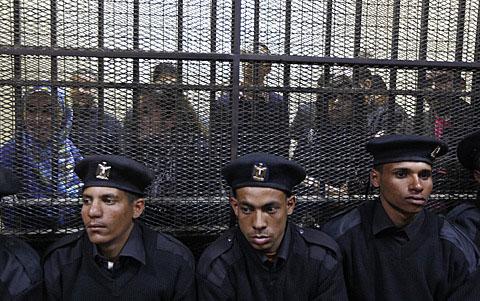
U.S. pro-democracy activists charged with encouraging unrest in Egypt have left Cairo after courts there lifted a travel ban against them. The standoff threatened more than $1 billion in U.S. financial support for Egypt.

State Department Spokeswoman Victoria Nuland said Thursday that the the Americans were allowed to leave Egypt after their non-governmental organizations agreed to post their bail.

"We are very pleased that the Egyptian courts have now lifted the travel ban on our NGO employees," said Nuland. "The U.S. government has provided a plane to facilitate their departure. And they have left the country. They are currently en route home.”

Nuland said the Americans were joined on their flight by Norwegian, Serbian, Palestinian and German NGO workers who also were accused by Egyptian courts of funding popular unrest and operating without proper registration.

She again said the Americans charged have done nothing wrong and that Washington will continue to work with Cairo's new leaders to ensure the free operation of international and Egyptian non-governmental organizations.

"The departure of our people doesn't resolve the legal case or the larger issues concerning the NGOs," she said. "We remain deeply concerned about the prosecution of NGOs in Egypt and the ultimate outcome of the legal process. And we will keep working with the Egyptian government on these issues.”

Asked whether the Americans will return to Egypt to face the charges against them, Nuland said it is for them and their lawyers to decide.

Sixteen Americans were among 43 NGO workers caught up in a December crackdown by Egypt's military-led government. An Egyptian court opened their trial on Sunday, but adjourned until late-April.

Egyptian authorities say the NGOs were interfering in Egypt's democratic future and encouraging protests against the government.

One of those groups, the International Republican Institute, says it is hopeful that the charges against its expatriate and local Egyptian staff will be dismissed. In a written statement, the group said it is concerned about the “continuing investigations of Egyptian civil society groups and the impact it will have on Egypt's ability to move forward with the democratic transition that so many Egyptians have sought."

Judge blocks Arizona immigration law's day labor rules

Posted: Wednesday, 29 February 2012 08:55PM

By Tim Gaynor


PHOENIX (Reuters) - A federal judge blocked Arizona on Wednesday from enforcing a part of the state's immigration law that prohibits vehicle occupants from stopping traffic to pick up day laborers waiting for work.

U.S. District Judge Susan Bolton, in issuing a preliminary injunction, ruled that plaintiffs seeking to overturn the law were "likely to succeed on the merits of their claim" that the rules violate the First Amendment.

Arizona's Republican Governor Jan Brewer passed the state's tough immigration law in April 2010, seeking to clamp down on illegal immigrants in the Mexico border state.

The section of the controversial law Bolton blocked on Wednesday sought to target people who employ migrant workers in the country illegally, many of whom gather in store parking lots and on curbsides in Phoenix to tout for work.

The non-profit National Day Laborer Organizing Network, which was a plaintiff in the suit, hailed the ruling.

"Today's decision is a victory for day laborers and everyone who cherishes the First Amendment right to free expression on public streets and sidewalks," network attorney Jessica Karp said in a statement.

"In seeking to silence day laborers, the state of Arizona trampled on the U.S. Constitution. Day laborers fought back and bravely defended the First Amendment for the benefit of all," she said.

Arizona's tough immigration crackdown had wide support in the state but was opposed by President Barack Obama, many Democrats and civil rights groups.

Opponents of the law said it would lead to harassment of Hispanic-Americans. Obama has called such "piecemeal" state legislation a mistake and warned that having 50 different immigration laws around the country is untenable.

In addition to the day labor provisions, the Arizona law includes a requirement that police check the immigration status of anyone they detained and suspected was in the country illegally. That was among measures blocked by Bolton before it came into effect in July 2010.

Arizona appealed the previous rulings placing the most controversial parts of the law on hold to the U.S. Supreme Court, which will hear the case on April 25.

Brewer said in a statement she was disappointed by Wednesday's ruling, which she described as an "erroneous decision by the U.S. District Court to strike down a significant public safety component" of the law, dubbed SB 1070.

"The provision, which would have prohibited day laborers from blocking traffic when seeking work on public roadways, was put in place as a necessary traffic safety measure," Brewer said.

"This ruling provides yet another reason why I look forward to the Supreme Court providing guidance on the constitutionality of SB 1070. I am confident that, when the case reaches the High Court in April, the constitutionality of SB 1070 will be affirmed," she added.

The Supreme Court's hearing next month on Arizona's appeal will be closely watched by Alabama, Georgia, Indiana, South Carolina and Utah, which have all passed "omnibus" immigration crackdowns since the desert state blazed the trail two years ago.

Monday, February 27, 2012

Across Arizona, Illegal Immigration Is on Back Burner

CHANDLER, Ariz. — The angry protests over Arizona’s tough policies focused on illegal immigrants are mostly gone. The sponsor of the state’s touchstone immigration bill has been recalled, while two sheriffs who championed the crackdown are enmeshed in legal difficulties. And there has been a notable decline in police activity aimed at illegal immigrants, easing a long period of anxiety among Mexican communities.
Two years after Gov. Jan Brewer, a Republican, signed legislation that required all immigrants to carry documentation or face arrest — a law that set off protests here and stirred a national boycott of the state — concern about illegal immigration is no longer the all-consuming issue it had been for so long.

The fading of the issue, at least for now, was most recently on display in the Republican presidential primary. At a debate here last week, it took an hour before the issue that has shaken Arizona for five years was raised.

“There’s no doubt that in Arizona, there is immigration fatigue,” said Scott Smith, the mayor of Mesa and a Republican. “People want to talk about things that impact them every day. And the reality is that in Arizona, illegal immigration does not affect you as much as not having a job.”

“It’s still important,” Mr. Smith said. “It’s just not as controversial here as it once was.”

The change has prompted worry among some of the leading advocates of tough immigration policies, even as they predict that the tide will change again — perhaps when the employment situation improves here and the flow of illegal immigrants slipping across the border picks up, or when the Supreme Court rules on a challenge to the Arizona law, SB 1070, later this year.

“It is not a front-burner issue now, because it’s been displaced largely by our dismal economy,” said State Representative John Kavanagh, a Republican. “It worries me, but I understand why it happens. And I just always remind people that the illegal immigration issue hasn’t gone away. It’s just been overshadowed and temporarily shifted to the back burner.”

Ms. Brewer — who announced on Sunday that she was endorsing Mitt Romney, a former Massachusetts governor, in this state’s primary on Tuesday — said in an interview that she had been disappointed by the limited discussion of policy on immigration and Mexico in last week’s Republican presidential debate and during the campaign.

“I would have liked to see a candidate come forward who understands the terrible disarray the state of Mexico is in. It’s a fractured, inoperable state right now,” Ms. Brewer said. “Everybody says they all have different ideas, but they all are basically saying pretty much the same thing.”

The economic problems here — joblessness, home foreclosures — have contributed to this shift in attention, along with the fact that there have been no recent crimes or arrests involving illegal immigrants. But not incidentally, this has taken place as some of the best-known players in the fight against illegal immigration here have run into legal and political troubles.

The sponsor of the original bill, Russell Pearce, the former head of the State Senate, was recalled from office in November in a display of the backlash that has caused alarm among Republican leaders. Joseph M. Arpaio, the sheriff of Maricopa County who has become one of the leading advocates of tough immigration policy, has been accused by the Justice Department of anti-Latino bias and abuses of authority.

Sheriff Paul Babeu of Pinal County was forced to step down as a co-chairman of Mr. Romney’s Arizona campaign last week amid accusations that he had threatened to deport a former lover — who was from Mexico — after he threatened to publicize their relationship. Mr. Babeu, who is now running for Congress, had appeared with Senator John McCain, Republican of Arizona, in a particularly tough immigration ad that Mr. McCain had used in his 2008 presidential run.

“The media coverage hasn’t been so great because Joe Arpaio is facing indictment, so he is laying pretty low,” said Bruce Merrill, an Arizona pollster and political analyst. “We have not had any arrests. When the media covers it, it causes the attention to go up. There’s a feeling here that it’s not as important as it once was.”

None of which is to say that immigration is not a major concern for most people in this border state, or that the passions could not arise again. “Around the country, jobs and the economy are on people’s minds,” said Representative Ben Quayle, Republican of Arizona. “You can talk about the economy and you can talk about how we are going to secure our borders.”

Mr. Merrill said his own polls had found that immigration continued to be listed as a top concern of voters here; the difference was that it had been joined by the economy and joblessness.

Chip Scutari, a political consultant, said attitudes among Arizona voters from both parties were more nuanced than was reflected in the actions of the Republican-controlled Legislature. “Many of the voters who support 1070 also support an earned path to citizenship,” he said of the immigration law. “I think border issues are in the mix. But because there’s been such a quagmire, it’s lost some of its sex appeal.”

Whatever the case, the waning interest may be something of a gift to the Republican presidential candidates, sparing them from being drawn into a “who can be tougher on illegal immigrants” fight that might hurt their appeal to Latino voters.

“They all kind of danced with the same rhetoric, but none of them wanted to embrace it as a central issue,” said Representative Raul M. Grijalva, an Arizona Democrat. “I think there was a calculated issue to minimize talking about something where they could lose voters.”

Whatever the short-term benefit for Republicans, Democrats and some Latino leaders argue that the party has suffered long-lasting damage. The spate of legislation has helped Democrats register more Latino voters and increase turnout in local elections, similar to what happened in California after Republicans supported tough immigration measures, including Proposition 187, the 1994 initiative that would have cut off public services to illegal immigrants.

“There has been a tangible, palpable momentum shift in the state, which is essentially saying, ‘Well that was a disaster, and what should we do about it?’ ” said James E. Garcia of the Arizona Hispanic Chamber of Commerce. “But the damage that the Republican Party did to itself in this state is absolutely comparable to what the Republican Party in California did to itself.”

Jeff Zeleny contributed reporting from Washington.

Saturday, December 10, 2011

Gov. defends immigration law

MONTGOMERY, AL (WSFA) -

Governor Robert Bentley reiterated his support for the immigration law today.

In a brief public appearance outside the Alabama Capitol, Governor Bentley declared, "We are not repealing it."

Earlier in the day, the governor had released a statement with the Speaker of the House Mike Hubbard and President Pro-Tempore of the Senate Del Marsh saying the law will not be repealed but that they were open to changes that wouldn't weaken it.

However when the governor was pressed by a reporter about possible changes to the law, Governor Bentley said, "There were unintended consequences."

The governor did not say what specifically in the law had led to the unintended consequences but said the immigration law, as with any piece of legislation, from time to time requires additional examination and possibly even revision.

"You know you just need to go back and look at it and you just say you know, if things are not working the way that we want it to, we need to change it" Gov. Bentley said.

Governor Bentley was explicit and said Friday's statement wasn't related to proposed changes made by Attorney Luther Strange on Dec.1 in a memo to lawmakers.

Attorney General Strange had proposed changing and deleting language from the law as well as even repealing certain sections. In particular Strange recommended repealing the section that required local law enforcement to hold someone who is in the country illegally until federal authorities arrive. Strange argued in his memo that the provision didn't align with Alabama law.

He also recommended repealing the sections requiring public schools to check the citizenship status of newly enrolled students and the one requiring that everyone carry registration papers or documents that can prove citizenship.

Federal judges have blocked those two sections from going into effect.

Gov. Bentley said "Many of the things that he has talked about really overlap with some of the things that we had already discussed and we had been working on this really for months ever since we started to enforce this law."

The governor said he will consider the changes Strange has proposed. He also remarked that Strange has a stake in the immigration debate since he will be the one defending the law in court.
Posted: Dec 10, 2011 5:49 AM PST


Bentley said he understood that Strange made his suggestions in order to make the law more defensible in court.

The governor also used Friday's announcement as another opportunity to attempt to reassure international companies in Alabama, as well as those considering Alabama as a location, that the state is open for business.

"We want companies especially international companies to understand that things have not changed" Gov. Bentley said. "We're going to still continue to recruit industry from other countries and we want them to know that they are going to continue to be welcome."

The governor said he has not heard from any company that they have decided against locating in Alabama because of its immigration law.

Sunday, December 4, 2011

The US immigration system is broken

Huge amounts of money are wasted on immigration detention in the US – it's inhumane, unjust, and possibly unconstitutional
Under the US constitution, people are entitled to all sorts of rights, particularly around personal liberties and freedoms. The current state of the immigration system in the United States is clearly violating some of these rights, in spirit if not in actual fact. Case in point is immigration detention; under the law, immigrants can be indefinitely detained while awaiting decisions on their cases, although a recent court case may change that. As my colleague Flavia Dzodan has pointed out, immigration detention is a global, multibillion dollar industry.

The US spends $5.5m daily on immigration detention. Expenditures are mounting every year, the result of a growing number of immigrants in detention, and at the same time, detainees are being deprived of due process thanks to a growing backlog of immigration cases that may leave people sitting for weeks, months, even years while they wait for hearings. To say nothing of conditions for detainees with disabilities, many of whom do not understand the proceedings against them and cannot adequately mount defences in court, some of whom are in the US legally, but get deported anyway.

This is part of the prison industrial complex in the US. The profits to be made from immigration detention are vast, especially as growing numbers of facilities are being privatised. Proponents claim this makes it cheaper to run detention centres, but this is not actually supported by the numbers, and it's also ripe for exploitation and embezzlement, as seen when prison officials do things like pocketing budgets earmarked specifically for food. Companies stand to make huge amounts of money from running private immigration detention facilities, and the government washes its hands of responsibility in the matter. It is just doing its job, after all.

It's hard to talk about immigration detention without looking at the growing tide of anti-immigrant laws in the US. All 50 states this year considered immigration-related measures. Many of those measures led directly to increasing criminalisation for immigrants in the US, which in turn created a need for more beds in already overstuffed detention centres. Multiple US states effectively put money directly into the hands of prison privatisation corporations, by ensuring a steady flow of "customers" for their caring attentions with this onslaught of legislation. It's similar to the flood of "tough on crime" laws seen in the 1990s that directly contributed to prison overcrowding, but there's a key difference.

People put in prison in the US are at least passed through some sort of semblance of a justice system. It is usually a mockery, it is classist and racist, it all but ensures that certain people accused of certain crimes will go to prison for it, but it is at least a pretence of constitutionality. People in US prisons, on paper, have been allowed an opportunity to go to court, to receive fair trials. The fact that trials are not fair is inescapable, and the fact that the system is in urgent need of reform is undeniable.

Immigrants, though, are detained purely on suspicion. They have not been convicted of any crime. They are being held while the government determines if they committed a crime. This differs from jailing in other cases, when people may be held if they are considered flight risks or threats to the safety of the community, while others are allowed out on bail, with the understanding that they will return to their communities. Mandatory detention laws in the US require that people accused of immigration violations be detained until trial. This translates into indefinite confinement.

Conditions in immigration detention centres are not pleasant. They are crowded and often unhealthy. The risks of contracting a communicable disease rise dramatically, as do the risks of experiencing mental health problems related to the stress of confinement. Adequate medical services are often not available. Detainees may be cut off from contact with their family members, who may be afraid to visit due to concerns about being caught up in immigration sweeps, even if they have documentation to prove they are in the country legally.

Huge amounts of money are being wasted on immigration detention in the US. No matter how people feel about immigration, government waste is a pressing issue, particularly right now, when budgets are undergoing severe contraction and we're struggling to find the funds to provide basic services. The amount spent on indefinite confinement for people awaiting deportation hearings could be applied to much more pressing issues; to making sure that schools can meet the needs of their students, for example. To providing healthcare to residents of the US. Even to analysis of immigration policy and recommendations for improving it.

The immigration system in the US is undeniably broken; this seems to be one thing everyone can agree on. Indefinite detention does absolutely nothing meaningful to address this issue, and it costs us a lot of money, to boot. It certainly does much to pad the pockets of corporations, but little to actually benefit society at large. It's inhumane, unjust, and possibly unconstitutional, depending on how one wants to interpret some clauses in the bill of rights. Like victims of the prison system in the US, many immigrants also do not receive fair trials when they finally do make it before a judge and have an opportunity to argue their cases. With a substantial court backlog, it's virtually impossible to give immigration cases the attention they deserve.

This is not the only country that does this, not the only place that keeps immigrants indefinitely in harsh and inhumane conditions while preparing to expel them. It is not the only nation passing an escalating assortment of anti-immigrant laws, some of which are so baldly racist that it's astounding they stand up to legal scrutiny for more than 30 seconds. This, our handling of immigration, is absolutely nothing to be proud of, and it's not in keeping with any national values I can think of.

Thursday, December 1, 2011

Honda employee cited for breaking US immigration law

MIAMI — A Japanese employee of automaker Honda was issued an immigration citation in Alabama for driving without a license, officials said Thursday, less than a month after a Mercedes-Benz executive was stopped.

The Japan-based employee, whose identity has not been disclosed, presented his passport and international driver's license, but that document is not recognized by Alabama, Leeds County police said. He was issued a citation under the state's immigration law late Monday and summoned to a local court.

Until recently, the lack of a license would have merited a mere traffic ticket -- but in late September, Alabama approved a state law authorizing police to detain foreigners suspected of being illegal immigrants after committing an infraction.

A federal appeals court in mid-October blocked sections of the Alabama immigration law -- the most severe in the nation -- especially provisions requiring schools to check whether students were in the United States legally.

But it backed the police powers to detain anyone suspected of being a illegal immigrant.

Under the law, anyone driving in Alabama must carry a valid license issued by the state or the driver's country of origin. If the driver does not show police a valid license, he or she is summoned to the nearest court.

The case came just two weeks after a visiting German executive for Mercedes-Benz was arrested in the state for driving without a license and lacking proper identification.

Outstanding Immigrants Collection

"Immigration is the story of American history. From the earliest days of our nation, generation upon generation of immigrants has come to be part of a land that offers freedom and opportunity to those willing to do their part. Immigrants built our great cities. They cultivated our rich farm lands. They built the railroads and highways that bind America from sea to shining sea. They erected houses of worship to practice their faiths. They fought under America’s colors in our wars... over the centuries, immigrants came to America from every part of the globe and made the American dream. They created a nation that is the envy of the world."
- Ted Kennedy, US senator

Our country has been founded on the hard work, resilience and perseverence of millions of immigrants. The following stories and profiles show the contributions that immigrants make in different fields. From medicine to the arts to sports to politics, these outstanding immigrants are only a few examples of the positive effects of immigration on our nation... a nation of immigrants!

Wednesday, November 30, 2011

US immigration H-1B visa cap met for foreign skilled workers

US Citizenship and Immigration Services (USCIS) announced they have received enough petitions for graduate level skilled workers under the H-1B visa program to meet the cap of 65,000 for fiscal year 2012. This is the earliest the visa cap has been reached in the past three years, signifying renewed demand for this visa program
Each year on April 1 the USCIS begins accepting H-1B petitions for the new fiscal year; USCIS announced the cap for H-1B visa applications was officially reached on 22 November, two months ahead of last year.
US businesses use the H-1B visa to employ foreign skilled workers in specialty occupations that require theoretical or technical expertise such as scientists, engineers or computer programmers. etc. The work visa is valid for up to three years from issuance and applicants can reapply for another three years for a total of six years.

US Immigration will continue to accept and process applications filed to extend current H-1B visas, change employment terms or employers, and to allow current H-1B visa holders to work concurrently in a second H-1B position.

The H-1B visa is very popular for many US IT firms looking to recruit skilled workers from abroad. Part of the renewed demand, particularly from Indians, may be due to US immigration creating stricter regulations about issuing visas for other visa categories, such as for L1s and B1s.

Apart from the annual quota of 65,000, an additional 20,000 H1-B visas are available every year under the advanced degree exemption for those who have a Master's or higher degree. This visa cap was met on 19 October 2011.

If you would like to apply for a US visa, WorkPermit.com can help. WorkPermit.com is a specialist visa consultancy with over twenty years of experience dealing with visa applications. We can help with a wide range of visa applications to your country of choice. Please feel free to contact us for further details.

Rick Perry Embraces Anti-immigration Crusader Joe Arpaio

Texas Gov. Rick Perry, eager to re-energize his struggling primary campaign for president, turned for support Tuesday to one of the country's most unapologetic crusaders against illegal immigration.

Arizona lawman Joe Arpaio -- the tough-talking, anti-illegal-immigrant sheriff from Maricopa County who is known for controversial immigration raids in Hispanic neighborhoods and for housing some inmates in tents -- gave Perry his endorsement and joined him on the campaign trail in New Hampshire.

"The federal government has failed on border crime and border enforcement, and no candidate for president has done more to secure the border than Governor Rick Perry," Arpaio said in a news release quickly distributed by the Perry campaign.

With Arpaio at his side, Perry told his New Hampshire audience that, if elected president, he would secure the border with Mexico within a year, deport all undocumented immigrants who are apprehended and stand against amnesty.

"My policy will be to detain and to deport every illegal alien that we apprehend," Perry said while in New Hampshire, according to the Texas Tribune.

Arpaio's endorsement provided Perry and his campaign the break they have been seeking as they try to reverse his steep drop in the polls after several poor debate performances. It is an opportunity that they hope will bolster Perry's appeal with conservative Republican voters, who see him as soft on border security because of his support of a Texas law that granted in-state tuition to qualifying undocumented immigrants at the state's colleges and universities.

But the traction that Perry could gain from the endorsement may still not be enough to revive his primary campaign, and he risks alienating Latino voters if he makes it to the general election, said Cal Jillson, a political scientist at Southern Methodist University.

"It's not a game changer," Jillson said.

Jillson added that Perry is primarily polling in single digits nationally, a tough fall for the governor who entered the race for the Republican nomination with front-runner status. He said Perry will have to try to hang on beyond the primary in New Hampshire, where he is polling at only 4 percent.

"New Hampshire is a very tough state for him," Jillson said. "He probably has to hope that he's still alive when the voting comes to South Carolina and that he can do much better there, but I think that's increasingly a long shot."

The endorsement and Perry's promise to "secure the border within a year" with more manpower, strategic fencing and aerial resources was competing for national attention alongside news of GOP candidate Herman Cain's decision to reassess his campaign, news of Europe's financial debt crisis and even stories of Perry's latest flub. Perry got the minimum voting age and the day of the general election wrong at a town hall meeting the same day he announced the Arpaio endorsement.

But the news did not slip past Lauro Garza, who is the Texas state director for Somos Republicans, the nation's largest conservative Latino group. Garza left the Republican Party after Cain floated the idea of an electrified fence along the border. The past Perry supporter said he became disillusioned with the governor when news first broke that he was courting Arpaio's endorsement.

"It is simply disgusting that Rick Perry would do this," Garza said about Perry's wholehearted acceptance of the endorsement. "Joe Arpaio is most certainly not America's sheriff. I am a veteran police officer and I am as qualified as he is and I can assure you that he is violating federal and state law and he is violating the rights of Americans in Arizona. He is a dreadful excuse for law enforcement and an even more dreadful excuse as a Republican."

Twitter Delicious Facebook Digg Stumbleupon Favorites More

 
Design by Free WordPress Themes | Bloggerized by Lasantha - Premium Blogger Themes | GreenGeeks Review