

Showing posts with label Alabama Law. Show all posts

Friday, June 22, 2012

Ed Miliband immigration rethink: Labour leader vows to ban foreigners-only jobs


In a speech in London, he vowed to stop ruthless bosses from undercutting the minimum wage by taking on foreign staff


Ed Miliband today pledged to stop companies blacklisting British workers in favour of cheaper foreign staff.

The Labour leader said UK-born jobseekers were being “locked out” of work by recruitment agencies.

And he admitted Labour had got it wrong while in Government by ignoring people’s “legitimate concerns” about immigration.

In a speech in London, he vowed to stop ruthless bosses from undercutting the minimum wage by taking on foreign staff.

He also promised to tackle recruitment agencies that offer jobs only to overseas workers.

And Mr Miliband pledged the stricter enforcement of minimum-wage laws to tackle the “nasty, brutish and short-term” exploitation of cheap labour.

He said the last Labour Government had became “too disconnected from the concerns of working people”.

He added: “It was a mistake not to impose transitional controls on accession from Eastern European countries.

"We severely underestimated the number of people who would come here.

“We too easily assumed those who worried about immigration were stuck in the past, unrealistic about how things could be different, even prejudiced.”

Mr Miliband went on: “By focusing exclusively on immigration’s impact on growth, we lost sight of who was benefiting from that growth – and the people being squeezed in the middle who were losing out.”

He said people who expressed legitimate concerns about immigration should not be dismissed as “bigoted” – a reference to Mr Brown’s encounter with Gillian Duffy during a visit to Rochdale in the 2010 election.

“Worrying about immigration, talking about immigration, thinking about immigration, does not make them bigots.

And since this conversation is going on in the houses, streets and neighbourhoods of Britain, it must be one the Labour Party joins too.”

But Immigration Minister Damian Green said: “Until Ed Miliband supports the Government’s measures to cut and control immigration, Labour will have no credibility.

“Under his leadership, Labour have opposed our aim to get annual net migration down to the tens of thousands and they have opposed the cap on economic migration.”

Institute of Directors director general Simon Walker said its members thought work-ethic and skills were twice as important as cost in choosing recruits.

And a recent study found immigrants were 60% less likely than Brit citizens to claim benefits.
My fears over immigration, by Ed Miliband

I know Mirror readers worry about immigration.

This is not because they are bigoted or prejudiced but because they are worried about the pressure­­­­ ­immigration has put on their wages, their public services and their communities.

And this is why we must talk about the issue and not sweep it under the carpet.

At the same time, I believe the public is fed up with politicians making promises on immigration they cannot deliver.

Immigration has had benefits for Britain, bringing people with energy, skills and ideas that have helped our economy.

But it also has costs and they have too often fallen on those who can least afford it.

Governments of both parties haven’t done enough to listen.

We didn’t get it right in government. We should have placed more restrictions on people coming from Poland and ­elsewhere in Eastern Europe.

And we were too slow to hear people’s concerns. Now we need a new approach.

A government I lead will be tougher on borders when new countries join the EU so large numbers of low-skilled people do not suddenly come to Britain.

We will also do something the Tories would never do – stop abuses of the minimum wage and ensure laws are properly enforced.

We won’t allow recruitment agencies to boast they only offer foreign workers, effectively locking out local people.

And we’ll work to improve training and skills in those businesses where working people can’t seem to get a look in because employers are relying on low-cost, ­temporary workers from abroad.

Above all, we will change our economy so that it works for you. Alongside tough controls, that’s the right way to tackle concerns about immigration.
Monday, February 27, 2012

Immigration is the Issue with Sheriff Paul Babeu

COMMENTARY | Something is rotten in Denmark, and it's not the fact Republican Pinal County, Ariz., sheriff Paul Babeu came out as gay. The issues in Arizona go much deeper. Babeu's former lover Jose Orozco's Internet abuses are problematic, says the Los Angeles Times. The coup de grace is immigration violation charges with subsequent deportation threats against Orozco, a Mexican national. The homosexuality, even the identity theft, is a smokescreen for the real agenda: Using personal issues to further political causes.

It shouldn't matter to the Arizona GOP, the Mitt Romney campaign or the general populace whether Babeu is gay, straight or pink with polka dots. If he's doing his job right, that's what's important. It's 2012; let's accept a homosexual can be a Republican, even though he might not agree with all of the party platform.

I'm a pro-life Catholic progressive social Democrat. There are parts of the party line I don't agree with (abortion rights), but by and large, the Democrats are closer to my way of thinking. Grass-roots efforts are the best way to address issues of morality, so I'll vote Democrat and work pro-life. I'm guessing that's how it is with Babeu. Like me, he might not like the two-party system, but he knows that to vote otherwise would basically be a discarded vote.

As per the oxymoron between Babeu embracing a Republican anti-immigration, anti-gay message but acting otherwise, people often fight hardest against issues that are raw spots. He's not the first. Look at televangelist Jimmy Swaggert decrying immorality while patronizing a prostitute. Look at Republican nominee Newt Gingrich, telling MSNBC that while harping on the Clinton-Lewinsky affair, he was carrying on an affair.

As for Orozco's retaliation with the online harassment, that needs to be addressed, but not under the guise of residency status. If, as per the Huffington Post, hints were dropped about the advisability of Orozco's keeping mum in view of his expired student visa, that's exploitation on all sides.

First, it exploits his relationship with Babeu and imbues it with shame. Second, invasion of Internet privacy is wrong, regardless of sexual preference. Third, mixing in immigration dilutes Orozco's real criminal activity of hacking. Last, a threat of deportation for personal gain is legalized extortion and a base misuse of authority.

Saturday, December 10, 2011

Immigration Authorities Release Alabama Woman After Appeal To Janet Napolitano

WASHINGTON -- Immigration officials released an undocumented Alabama woman from custody on Thursday, about four hours after a Democratic congressman told Department of Homeland Security Janet Napolitano about her case.


The woman, a 19-year-old named Martha, was stopped on Dec. 3 for driving without lights, and then arrested because she did not have a driver's license. Although police planned to release her, she remained in jail at the request of Immigration and Customs Enforcement agents -- even though she has a clean criminal record, is married to a U.S. citizen and has an American-born daughter.

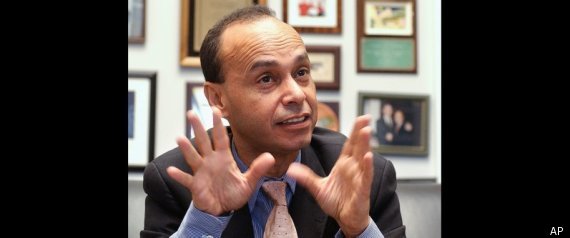
Her case caught the attention of Rep. Luis Gutierrez (D-Ill.), who traveled to Alabama in November to talk to residents about the impact of the state's HB 56 immigration law. He brought up Martha's situation and a recently announced "prosecutorial discretion" policy by Immigration and Customs Enforcement to drop deportation cases against some undocumented immigrants deemed low priority. Gutierrez requested that Martha's last name be left out to protect her identity.

Martha should fit into that category, he said, but was instead being held in jail because of her immigration status.

A few hours after Napolitano's meeting with members of Congress ended, Martha was released and returned to her husband and children. On Friday, Immigration and Customs Enforcement dropped all proceedings against the woman.

"It upsets us that it took so long," Gutierrez told HuffPost of Martha's release. "On the positive side, she's with her husband. ... She's back with her child and with her husband, and for the immediate future she's not deportable."

He declined to comment on what he heard from Napolitano on Thursday, saying it was a private meeting. But Gutierrez said he believes Napolitano is committed to implementing the prosecutorial discretion policy, even though it is not yet implemented in every case.

A Department of Homeland Security spokesman did not respond to an inquiry about whether the woman's release was connected to the secretary's meeting with members of Congress.

Gutierrez is pushing immigration officials to release other immigrants who have long-standing ties to the United States. He is also working with a man in South Carolina, another state with a recently-passed immigration law, who was released after the congressman helped prove that the man entered the United States as a child and had citizen family members.

Of course, not all detained undocumented immigrants can receive help from advocacy groups or members of Congress. Gutierrez said he wants to pressure immigration officials to ensure the prosecutorial discretion policy is implemented nationwide and encourage undocumented immigrants to carry papers that show their ties to the United States.

"The complaint is it's just not working on its own," he said. "Lots of things don't work on their own. Every day you have to be an activist to ensure that government is being fair and equitable with people."

Sunday, December 4, 2011

Australia immigration minister wants more refugees

SYDNEY — Australia's Immigration Minister Chris Bowen Saturday called for a lifting of the nation's annual refugee intake from 13,750 to 20,000 but said he still wanted asylum-seekers processed offshore.

The proposal won the support of the ruling Labor Party at its national conference in Sydney, but Bowen has said the target is aspirational while plans to send boatpeople to other countries have been blocked by the High Court.

"We have to tackle this with a soft heart and a hard head," Bowen told delegates.

Bowen said refugees were risking their lives on boat journeys between Australia and Indonesia, a perilous stretch which saw close to 50 people drown in a shipwreck off Christmas Island a year ago.

"There have inevitably been others that we simply don't know about," he said.

In a bid to deter people-smugglers, Canberra in May announced plans to send 800 boatpeople to Malaysia in exchange for accepting 4,000 of the Southeast Asian nation's registered refugees.

But the plan collapsed in August after Australia's High Court ruled offshore processing illegal.

Bowen has said he still wants to see a regional solution to the problem which in 2010 peaked when people-smugglers brought close to 7,000 asylum seekers on the dangerous boat journey to Australia.

The issue provoked debate Saturday, with some Labor delegates saying the Malaysia solution violated Australia's international obligations.

"Australia cannot contract out its legal obligations," backbencher Melissa Parke said.

But in backing Bowen, Home Affairs Minister Brendan O'Connor said people-smugglers were "not modern-day Oskar Schindlers" -- a reference to the German industrialist credited with saving Jews during WWII.

"Nothing could be further from the truth," he said.

"This is profiting from desperate people."

After the High Court blocked offshore processing, which was also slated to include Papua New Guinea, the government of Prime Minister Julia Gillard has taken on onshore processing and widened community detention.

Since the so-called Malaysia plan was scuppered, the number of boatpeople arriving in Australia has ballooned, with two more boats carrying close to 100 asylum seekers intercepted off Western Australia on Friday.

Two other boats carrying more than 200 asylum-seekers were intercepted on Thursday.

Friday, December 2, 2011

County receives U.S. aid, for now, to fight illegal immigration

It has become an annual exhibition in the government's eternal struggle to balance budgets and fight illegal immigration.

Politicians propose removing the federal funds that flow to local law-enforcement agencies as reimbursement for the costs of housing undocumented immigrants, and every year those funds are reinstated.

This year's restoration of funding came just before Thanksgiving in a quietly passed appropriations bill that included funding for farms, research and transportation. The bill also included $240 million to reimburse jailers for the costs of housing undocumented inmates.

On Wednesday, the Maricopa County Board of Supervisors passed a portion of those funds through to the Sheriff's Office, giving the agency $2.2 million to offset some of the costs associated with undocumented inmates.

The federal funds also included more than $9 million for the Department of Corrections.

The money is allocated annually based on the number of days each undocumented immigrant is housed in a jail or prison. The reimbursement rate is about $30 per inmate per day.

Daily incarceration costs can vary based on factors such as where the inmates are housed. It costs about $56 each day to keep a convict in an Arizona state prison.

County jails and the state have received nearly $100 million through the program since 2006, but federal lawmakers eye the money each year when it comes time to balance the budget.

This year's allotment was in jeopardy after President Barack Obama introduced a budget in the spring that eliminated the money, but the funding found its way into a multifaceted appropriations bill that Obama signed Nov. 18.

Officials in Arizona were thankful for the $12 million that came the state's way this year but said it does not come close to covering taxpayers' costs.

"Some money's better than nothing," Maricopa County Sheriff Joe Arpaio said. "It's still not as much as we should be receiving."

It is a familiar refrain that crosses party lines.

Former Democratic Gov. Janet Napolitano regularly billed the federal government in an attempt to recapture some of the expenses the state incurred to house undocumented inmates. And former Republican state Treasurer Dean Martin followed suit and sent federal officials a $1 billion bill in early 2010 in an ill-fated attempt to recoup some of the same expenses.

But in a climate where every federal dollar spent is being scrutinized, it can be hard for politicians to balance their desire for the federal government to meet its obligations and for fiscal conservatism.

Gov. Jan Brewer is among them.

Brewer is sensitive to the federal government's budget crunch, said spokesman Matt Benson, but Brewer wants cuts to come from areas other than the State Criminal Alien Assistance Program.

"The governor doesn't believe that SCAAP funding for states is the best approach to reducing federal spending because ultimately those costs are being born by the states," Benson said. "It's not like they disappear."

Rep. Jeff Flake, a fiscal conservative, was among the six Arizona delegates who voted against the appropriations bill that included SCAAP funds. Sen. John Kyl and Reps. Ed Pastor and Paul Gosar voted for the measure, and Rep. Gabrielle Giffords did not vote.

Flake said Arizonans who are not accustomed to the money serving as a political football should get used to it.

"Unfortunately, I think that what's past is prologue here. We're going to see more of this battle every year," Flake said. "There will be increased pressures, I think, on all funding. It's not like you have to rob something in another area of government (to continue funding the program)."

Keeping the reimbursement program alive, Flake said, will require reducing some of the money that flows from the Department of Homeland Security to state and local law-enforcement agencies if there is not an obvious connection to federal mandates.

"Whether we like it or not, providing funding for local fire departments and (Community Oriented Policing grant) funding, that certainly is appreciated by folks at the local level, but there's not really a federal nexus there," Flake said. "Here, there is

Bentley says immigration job arrests won't stop Alabama job recruitment

MONTGOMERY, Alabama -- Gov. Robert Bentley said the arrests of two international auto plant workers under Alabama's immigration law "look bad" but maintained the state will still be successful in recruiting industry.

"We have had some unfortunate incidents that certainly look bad. But we are continuing to recruit jobs to the state. We have announcements that will be coming up very soon," Bentley said in response to questions about the arrests.

"Jobs are still coming to Alabama. We feel like Alabama is open for business," Bentley said.

Alabama's new immigration law has ensnared two international workers from two of the state's much coveted foreign automobile manufacturers.

A visiting German Mercedes-Benz executive was arrested and taken into custody after being unable to produce proper documents while driving a rental car in Tuscaloosa. The man was released after an associate retrieved his passport, and the charge was dismissed.

A Japanese man employed by Honda was issued a ticket for driving without a valid license and was arrested for being in violation of a section of Alabama's immigration law that requires everyone to have a valid license while driving. The worker produced a valid passport and a Social Security card that allowed him to work in the United States, but did not have a valid Alabama or Japanese license with him.

City officials said he was released on a signature bond at the checkpoint and was not taken to jail. The charge was dismissed after a copy of his Japanese license was shown to the court.

Critics have said the state is giving the impression that it is hostile to foreigners. The St. Louis Post-Dispatch wrote an editorial inviting Mercedes to move to Missouri.

"Our state has many advantages over Alabama. We are the Show-Me State, not the 'Show me your papers' state,'" the paper wrote.

But proponents of the law have dismissed those concerns, saying the law worked and that the incidents have been exaggerated in the media.

Bentley, as he has said before, stated he is open to tweaks in the law, particularly those that would make it clearer.

"We are going to look at all aspects of it and see if there are any simplifications or clarifications that need to be made," Bentley said.

JOEY KENNEDY: Alabama's harmful immigration law creating labor shortages

Alabama's overreaching immigration law has done a great job of chasing people out of the state and opening up jobs. Problem is, Alabama people aren't filling those jobs.

Analysis has already shown that the drop in Alabama's unemployment rate is not because of the harsh immigration law but, instead, due mostly to seasonal hiring, government hiring and thousands of unemployed jobseekers giving up.

There are jobs out there, but not the kind many Alabamians apparently want to do or are trained to do. I know, I know. What's the evidence?

John McMillan, Alabama's commissioner of Agriculture and Industries, is holding a meeting in Mobile on Tuesday to address the chronic labor shortages created by the immigraton law in south Alabama.

McMillan is a conservative Republican, but he knows the immigration law is hurting the state's construction industry and farmers. And before somebody starts hollering that illegals shouldn't be holding those jobs, understand that many of the people who have left the state are documented workers but fled because they didn't want be harassed under the law. Why work in a state where you are looked upon with suspicion when you can drive 50 or 100 miles and work in a state that accepts you for your skills and work ethic?

The press release from the agriculture department says the "purpose of the meeting is to bring agribusiness owners and farmers together with federal and state officials to help solve the chronic labor shortages created by Alabama's new immigration law."

This supposed job-creation law turns out to be more of a labor shortage creation law. That's what happens when lawmakers really have no clue what they're doing, but do it anyway to get a thrill out of being able to brag how tough they are. Macho-men!

That's not new, though. There's never been a shortage of bullies in Alabama who like pushing around others, especially those who are less fortunate. Sadly, it's part of our state's personality, and we fail to learn from our mistakes.

Malaysia swap deal remains ALP policy

The ALP has backed a huge boost to the nation's refugee intake while maintaining a controversial plan to process asylum seekers offshore under a deal with Malaysia.

Immigration Minister Chris Bowen's proposal to keep the people-swap deal as party policy and increase the refugee intake to 20,000 a year, from 13,750, was accepted at the ALP national conference in Sydney on Saturday.

"We have to tackle this with a soft heart and a hard head," Mr Bowen said.

Home Affairs Minister Brendan O'Connor told delegates that boat people smugglers were "not modern-day Oskar Schindlers" - a reference to the German industrialist credited with saving more than 1100 Jews during World War II.

"Nothing could be further from the truth," he said.

"This is profiting from desperate people. This is exploitation whatever way you cut it."

Under the deal announced in May, Australia would send 800 asylum seekers to Malaysia for processing and receive 4000 people already judged to be genuine refugees.

But the High Court has ruled offshore processing is illegal and the government has not had the numbers to change the law.

The Gillard government has now adopted onshore processing and community detention as a default position.

After the conference vote, Mr Bowen admitted the result did not mean Opposition Leader Tony Abbott would support the government's policy.

"Any complaints about boat arrivals are particularly hollow when the (opposition) have a solution before them," he told reporters.

Opposition immigration spokesman Scott Morrison said the government's asylum seeker policy had failed and any policy decisions taken by the ALP national conference would not change that.

He dismissed Mr Bowen's proposal as "a desperate plan to a divided party for a failed Malaysia people-swap".

Meanwhile, an alternative proposal from the Labor Left to scrap offshore processing of asylum seekers was beaten.

Backbencher Melissa Parke told the conference the Malaysia deal fundamentally discriminated against the human rights of asylum seekers.

"Australia cannot contract out its international legal obligations," she said.

Ms Parke said it was irresponsible to send asylum seekers to a country that did not recognise refugees.

Australian Manufacturing Workers Union organiser Darren Dwyer said the debate was about human rights, not "some pinko ideology".

He said he felt ashamed to be a Labor member.

The Bowen proposal was supported 206-179.

Cepeda: Gingrich’s tightrope walk

Moments after the last Republican presidential candidate debate ended, the ever-breathless blogosphere started wondering if Newt Gingrich was making a play for the Latino vote with his controversial remarks about being humane to America's 11 million illegal immigrants.

Of course he was. Gingrich may be many things — a highly paid consultant to eyebrow-raising clients, a philanderer and a prolific, if ungifted, author — but he's not ignorant of Hispanic voting power.

For the past few years, Gingrich has been working overtime to eradicate the fallout from his infamous 2007 speech to the National Federation of Republican Women when he said Spanish was "the language of living in a ghetto."
"Whether you are first-, second-, third- or fourth-generation Hispanic — or whether you speak English or Spanish or both," the website's "About Us" page says, "our content is catered to what unites us all, which is our American Hispanic Heritage."

Last December, "The Americano" had its first national forum, pulling together a who's who of Hispanic conservatives to discuss a variety of leadership topics, including immigration and national security, which no doubt provided much input to Gingrich's immigration stance. The event got big play on Latino traditional and social media.

So there's no mistaking that Gingrich has been diligently courting Latino voters. But doing that while still convincing the far-right wing of the Republican Party that he's not a "Republican in name only" because of his centrist immigration views is a difficult tightrope to walk.

Unfortunately for Gingrich, the only immigration view most people seem to be able to agree on is that the 1986 Simpson-Mazzoli amnesty didn't work. And though immigration is not the top concern for Latino or other voters, it provokes the strongest emotions from both sides. As a result, because Gingrich's immigration "solutions" are largely moderate and reasonable, they are the antithesis of what the vocal extremes deem acceptable.

Every plank of his treatise can be ardently disputed by both sides. For instance, Gingrich's No. 1 priority is for the border to be "controlled." But while ultra-liberals, citing the unprecedented show of force at the border and record number of deportations, scoff at what they see as an accomplished goal, ultra-conservatives refuse to consider any other aspects of immigration law reform until there is an air-tight seal between the U.S. and the rest of the world.
We could pingpong Gingrich's other points, too: Visa and guest-worker programs seem to be held in equally low regard by both sides, though for different reasons, and neither side seems willing to entertain a permanent noncitizen "legal" status. As I recall, there was practically a second civil war the last time anyone seriously suggested, as Gingrich does, that our country's official language should be English.

If we've learned anything in the last few years, it's that neither the far right nor the far left wants compromise — their arguments are framed only as triumphant wins or tragic losses. This makes Gingrich's middle-ground stance his greatest weakness concerning the immigration issue.

After the debate, his campaign was diligently tweeting out the link to his official immigration platform, "10 Steps to a Legal Nation." Since winning the endorsement of The Union Leader, New Hampshire's largest newspaper, Gingrich's website's home page has prominently featured the news headline "Newt's Plan to Secure the Border First," and this has become the talking point du jour.

Who can blame him? Taking the middle ground on immigration is like setting up shop in Death Valley. The end of the balancing act has already begun. Watch for Gingrich to leap off the tightrope with a hard-right lurch.

Unlike other Republicans who combine their desire for small government and low taxes with a head-on-fire dislike of illegal immigrants, Gingrich has gone in the opposite direction of the hard-liners and built some platforms on which to gamely court Latinos.

In September 2009, he started up "The Americano," a bilingual news and opinion site geared toward "celebrating Latino heritage and conservatism in America." Founded and edited by Sylvia Garcia, a longtime Gingrich Communications employee who had also overseen his Spanish-language website, the site launched with the aim of being "inclusive of all americanos that have come to live to the United States."

ICE busts child porn ring

An Ontario man who federal immigration agents say had amassed one of the largest collections of child pornography was arrested Friday and released on bail later that day by a federal judge.

Michael Peterson, who was arrested with seven other people as part of a child porn sting, was suspected of possessing more than 500,000 pictures and 7,500 videos depicting child porn, according to federal agents.

U.S. Immigration and Customs Enforcement officials called it one of the largest collections of child pornography ever found.

ICE agents arrested Peterson, 58, about 6 a.m. at his Ontario home on suspicion of possessing, receiving and distributing child pornography.

"The images and videos contained children, between the approximate ages of 18 months to 17 years old, posing nude or engaged in explicit sexual acts with other children, with adults or with children and adults," according to a criminal complaint filed against Peterson.

The arrests include four other local men, from Upland, Rancho Cucamonga, Colton and Mentone.

The case stemmed from an undercover investigation by Delaware-based Homeland Security agents, who were focusing on a peer-to-peer file sharing network.

In May, undercover agents connected with Peterson using the name "mikeytoo" on a peer-to-peer file sharing. In one day, the agents downloaded 57 images and five videos depicting minors engaging in sexually explicit activities and nude photos directly from mikeytoo's network, according to the criminal complaint.

Agents tracked the Internet protocol address to Peterson's home and raided his residence in July, seizing nine external hard drives, three laptop computers, two computer towers, one flash drive, a video camera and other electronic items.

During the search of Peterson's home, agents saw two laptops on a table, one of which was actively downloading child pornography through the peer-to-peer network under the username "mikeytoo," according to the complaint.

"The open laptop was later found to contain 44 images containing child pornography, and the hard drive attached to the computer was later found to contain more than 7,000 movie files and more than 300,000 images files containing child pornography," according to the complaint.

ICE Homeland Security Investigators and field agents said they have never seen a collection as big as Peterson's.

"I was absolutely flabbergasted," said Debra Parker, assistant special agent in charge for ICE Homeland Security Investigation in Riverside and San Bernardino counties. "I just cannot imagine a half-million images."

But law enforcement officials were not the only ones surprised by Peterson's alleged actions.

His neighbors in the 3100 block of Centurion Place also were shocked to hear what he was accused of, especially because there are so many children living in the area.

"It's pretty disturbing he could live quietly in your midst," said Scott Marx, who lives nearby. "There are kids playing in this neighborhood."

A married couple living two doors away from Peterson and his male partner said the men kept to themselves and didn't talk to anyone. They found out about the child pornography charges on Friday.

"This is so scary," said Israel Berber. "We have a 2-year old and a 7-year old and kids are always out here playing."

"They just don't look like the type to do something," Berber's wife, Hilda Garcia, said about Peterson and his partner. "It's a pretty safe neighborhood."

The male partner was not included in the arrests Friday.

Peterson, a pipefitter, was taken into custody after months of forensic analysis on the seized property.

"Before we can bring a case we have to establish the fact that they are in possession of and involved in illegal activity," said Virginia Kice, an ICE spokeswoman.

Establishing that a suspect is for a fact involved in illegal activity can be a timely process.

"It can take a significant period of time," Kice said.

Also arrested in the ring were David Christopher Jelaca, 37, a registered nurse from La Quinta; Alexander Scott Branson, 25, of Upland; Ronald Sousa, 67, of Cathedral City; Bolivar Arnoldo Guillen, 59, of Rancho Cucamonga; Ronald R. Jaenson, 66, of Colton; John Anthony Serrano, 37, of Barstow; and Anthony Starkweather, 20, of Mentone.

The eight defendants arrested Friday made their initial court appearances in the afternoon in United States District Court in Riverside. As of 8 p.m., four of them had seen the judge and were granted release with bail.

Federal prosecutors and defense lawyer Alan Eisner argued before Judge David T. Bristow for more than hour late Friday about whether Peterson should be detained or eligible for release in lieu of bail.

While Assistant United States Attorney Ami Sheth argued that the sheer volume of images made Peterson a danger to the community, Eisner said his client had no criminal history, no prior offenses, no passport and had been in a 20-year relationship with a life partner.

Peterson didn't commit any hands-on offenses, and there was no evidence of him luring victims or chatting online using sexual terms, his defense lawyer said. The defendant also didn't flee while he was out of custody during the five months between the agents' search in July and his court appearance Friday.

Bristow determined the defense had met the burden in arguing for release and ordered Peterson to home detention, with intense supervision, electronic monitoring and a number of other conditions.

Bail was set at $250,000 bail, and the judge said "significant resources" had been made available for Peterson's bail.

"This is a difficult case," Bristow said. "And it's difficult precisely because of the volume of images."

In a different case, the FBI arrested a ninth man this week on suspicion of possessing and distributing child porn. Enrique Garcia, 26, of Hemet, appeared in federal court in Riverside on Thursday and is free after posting bail. Garcia is scheduled to be arraigned in Los Angeles on Monday.

The cases are part of the Department of Justice's Project Safe Childhood, which targets people who exploit children through the Internet.

"Every time these illegal images are produced, transmitted or viewed, a child is victimized," Parker said. "We owe it to the young victims in these cases to pursue the offenders aggressively, since many of the children who are sexually exploited by those who produce child pornography will bear the emotional scars for rest of their lives.

Mitt Romney’s “Solution” to Immigration Calls for Latino Immigrants to Go “Home

Mitt Romney has officially staked out the most extreme immigration position possible: the removal of every undocumented immigrant in the nation. His message to Latino immigrants is: “go home.”


In the recent dustup over Newt Gingrich’s limited but sensible recognition of the simple fact that America will not and should not move to expel 11 million undocumented immigrants—many of whom have lived and worked here for well over a decade—Mitt Romney’s current position on immigration reform has become clear: anything short of mass deportation is “amnesty.”


At last week’s Republican presidential debate, Newt Gingrich reiterated his view that some undocumented immigrants who are deeply rooted in America should have a path to legal status – but not citizenship. Gingrich said:


I don’t see how the party that says it’s the party of the family is going to adopt an immigration policy which destroys families that have been here a quarter century, and I’m prepared to take the heat for saying, let’s be humane in enforcing the law without giving them citizenship but by finding a way to create legality so that they are not separated from their families.


Gingrich’s “red card” proposal calls for legalization but no citizenship, which is applicable only to a small group of undocumented immigrants. This falls well short of the comprehensive immigration reform plan of 2006 that received the backing of 23 Republican Senators and President George W. Bush. Even an earlier incarnation of Mitt Romney expressed support for an earned citizenship policy that goes well beyond what Gingrich is now proposing. In a 2006 interview with Bloomberg News, Romney said, “We need to begin a process of registering those people, some being returned, and some beginning the process of applying for citizenship and establishing legal status” and said in reference to undocumented immigrants, “We’re not going to go through a process of tracking them all down and moving them out.


Despite this past support for comprehensive immigration reform, the shape-shifting Romney is now intent to shore up his anti-immigrant bona fides at any cost, labeling the Gingrich plan “amnesty” and sending out an Iowa mailer that touts Romney’s unparalleled tough record on immigration. In the spin room after last week’s debate, Romney adviser and spokesman Eric Fehrnstrom explained the Romney immigration plan:


“You turn off the magnets, no in state tuition, no benefits of any kind, no employment. You put in place an employment verification system with penalties for employers that hire illegals, that will shut off access to the job market, and they will self retreat. They will go to their native countries.”


The bad news for Romney is that by admitting that the goal of his immigration plan is to expel the 11 million undocumented immigrants currently settled in the United States, he positions himself on the wrong side of the issue for three quarters of the American people and the millions of Latino voters who view immigration as a personal and defining issue.


In his painfully obvious attempt to pander to the hard right on immigration to shore up his conservative credentials, Mitt Romney has instead run headlong into a political disaster of his own making. His best argument in the primary is his electability in the general election. And yet by taking such a hard line position on immigration, he is making it impossible to win the 40% of the Latino vote he needs to win swing states such as Colorado, Florida, New Mexico and Nevada. His desperation on immigration is literally undermining the rationale for his candidacy.

U. S. Legislative Immigration Update August 8, 2011

Department of Justice Sues Alabama

In a complaint filed early last week, the U.S. government filed suit against the State of Alabama to prevent the state’s recently-passed immigration law from taking effect in September. In the filings, the U.S. argued for H.B. 56 to be preliminarily and permanently enjoined from enforcement. The federal government asserts that numerous provisions of Alabama’s law are preempted by federal laws and therefore violate the Supremacy Clause of the Constitution. (U.S. Const., Art. VI, Cl. 2) The complaint also claims one of the provisions violates the Constitution’s Commerce Clause. (U.S. Const., Art. 1, Sec. 8, Cl. 3)

The U.S. government is petitioning the courts to rule that the power to regulate immigration is one of the authorities that is exclusively vested in the federal government, and therefore H.B. 56 is preempted. (U.S. Const. Art. 1, Sec. 8, Cl. 4 assigns the federal government with the power to establish an uniform Rule of Naturalization) The complaint acknowledges that while a “state may exercise its police power in a manner that has an incidental or indirect effect on aliens, it may not establish its own immigration policy or enforce state laws in a manner that interferes with the federal immigration laws.” (U.S. v. State of Alabama & Governor Bentley, p. 2)

The federal government asserts that the state has gone too far with its enactment of H.B. 56, crossing the constitutional line from being able to regulate legitimate areas of local concern into interfering with federal immigration law and corresponding policies of the federal government. By emphasizing maximum enforcement of immigration laws, the government argues, “H.B. 56 ignores the many other objectives that Congress has established for the federal immigration system.” (U.S. v. State of Alabama & Governor Bentley, p. 4) The complaint notes that “assuring effective enforcement of provisions against illegal immigration and unlawful presence is a highly important interest, but it is not the only goal of the federal immigration laws. The laws also take into account other uniquely national interests, including facilitating trade and commerce; welcoming those foreign nationals who visit or immigrate lawfully and ensuring their fair and equitable treatment wherever they may reside; responding to humanitarian concerns at the global and individual levels; and otherwise ensuring that the treatment of aliens in our nation does not harm our foreign relations with the countries from which they come or jeopardize the treatment of U.S. citizens abroad.” (Id. at 10, 11)

In particular, the federal government seeks to immediately prevent the implementation of the following provisions of H.B. 56:

§ 6: This section requires all Alabama state and local law enforcement agencies to enforce H.B. 56 to their full extent. If an enforcement agency refuses to do so, the agency may be subject to a private right of action by any lawful resident of Alabama and be forced to pay a civil penalty. The agency may also face sanctions and a loss of appropriations from the State of Alabama.
§ 10: Section 10 makes it a criminal offense in Alabama to violate federal laws which require aliens to carry their registration cards (8 U.S.C. § 1304) and register with the federal government (8 U.S.C. § 1306(a)). Under federal immigration laws, unlawful presence by itself is not a criminal offense, although it may subject an alien to the civil remedy of removal. (8 U.S.C. §§ 1182(a)(6)(A)(i), 1227(a)(1)(B)&(C)) Federal laws provide that unlawful presence may become an element of a criminal offense when an alien is unlawfully present after having previously being removed or voluntarily departing from the U.S. (8 U.S.C. § 1326) It is unlawful entry into the U.S. that the federal immigration laws have deemed to be a criminal offense. (8 U.S.C. § 1325) Additionally, the federal government asserts its control over alien registration, including some situations where the federal government may have knowledge of an alien’s presence even though the alien may not have proof of their registration. (U.S. v. State of Alabama & Governor Bentley, p. 16)
§ 11(a): This section makes it a crime for an unauthorized alien to solicit work in the state of Alabama.
§ 12: Section 12 allows Alabama law enforcement officers to verify an individual’s immigration status with the federal government if reasonable suspicion of unlawful presence arises during a lawful stop, detention or arrest.
§ 13: Section 13 makes it a crime to knowingly: conceal, harbor or shield an illegal alien from detection; inducing an illegal alien to come to reside in the state; transport an illegal alien in furtherance of the individual’s unlawful presence. It also renders it a state crime to knowingly enter into a rental agreement with an illegal alien.
§ 16: This section penalizes employers who knowingly seek a tax deduction for wages paid to illegal aliens.
§ 17: Section 17 allows lawful citizens of Alabama a private right of action to sue employers who have discharged or failed to hire a citizen employee while hiring or retaining an alien unauthorized to work in the U.S.
§ 18: This section requires motor-vehicle drivers to carry a license with them. If an individual is arrested for driving without a license and an officer cannot verify that the individual actually has a valid driver’s license, authorities must initiate an inquiry into the individual’s immigration status and may detain the person while verification is pending.
§ 27: This provision prevents Alabama state courts from enforcing the terms of a contract of which an illegal alien is a party to the contract, and the other individual had knowledge that the alien was unlawfully present at the time of the contract.
§ 28: Section 28 requires public elementary and secondary schools to determine the citizenship status of enrolling students for reporting purposes.
§ 30: This section makes it a felony for an illegal alien to enter into a business transaction with a state or local government within Alabama.

By moving for a preliminary injunction, the U.S. is asking the federal courts in the Northern District of Alabama to prevent H.B. 56 from taking effect until a full trial can be heard on the merits of the case. The motion is scheduled to be heard on August 24. (The Birmingham News, August 4, 2011)

Civil rights and religious groups have also filed suit against the state. In addition, Mexico and 15 other nations filed amicus briefs to support the U.S. government’s suit against Alabama. (The Birmingham News, August 4, 2011) The law’s original sponsor, Rep. Micky Hammon, continues to stand by H.B. 56. "The Obama administration and the federal bureaucrats have turned a blind eye toward the immigration issue and refuse to fulfill their constitutional duty to enforce laws already on the books.” Hammon said. “Now, they want to block our efforts to secure Alabama's borders and prevent our jobs and taxpayer dollars from disappearing into the abyss that illegal immigration causes." (Associated Press, August 2, 2011)
DHS Tells Governors it Doesn’t Need Their Permission for Secure Communities

On Friday, the Department of Homeland Security (DHS) sent letters to governors of the 39 states participating in Secure Communities, informing them that it was rescinding their memorandums of agreement to participate in the fingerprint-sharing program. (LA Times, Aug. 6, 2011) The rescissions, however, do not signal an end to the program, but rather an acknowledgement by the government that Secure Communities is a mandatory program that does not require an agreement with the state. (Id.) “This change will have no effect on the operation of Secure Communities in your state,” clarified Immigration and Customs Enforcement (ICE) Director, John Morton, in the letters.

The open-borders lobby was outraged over the announcement. Chris Newman, Legal Director of the National Day Laborer Organizing Network (NDLON) alleged in a statement, “All the deception in the world can’t hide the fact that the S-Comm [Secure Communities] is horrible policy. By entangling local police in immigration enforcement, S-Comm is criminalizing immigrants and leading to the Arizonification of the country.” (NDLON Press Release, Aug. 5, 2011) Margaret Huang, Executive Director of the Rights Working Group, argued, “By continuing to support this program they [the U.S. government] are sanctioning racial profiling, eroding the trust local law enforcement agencies have built with communities of color and showing the international community that our immigration system does not respect the basic human rights of all persons in our country.” (Rights Working Group Press Release, Aug. 5, 2011)

The decision by federal immigration officials to rescind the separate state agreements and continue to set up the program unilaterally comes on the heels of several governors insisting the program was voluntary. Since May, the governors of New York, Illinois, and Massachusetts—states with some of the largest illegal alien populations in the U.S.—have announced the cancellation or suspension of their agreements to participate in the program. (New York Times, Aug. 6, 2011; see also FAIR Legislative Update, June 6, 2010) The federal announcement could also affect legislative efforts in California to prevent the state from participating in Secure Communities. (Fox News Latino, May 27, 2011) There, the California Assembly passed AB 1081, which would require local jurisdictions wishing to participate in Secure Communities to do so expressly by passing a local ordinance. (See AB 1081 at §2) AB 1081 would also limit the submission of fingerprints to those convicted of – rather than arrested for – a crime. (Id.)

According to DHS, Secure Communities is scheduled to take effect nationwide by 2013.
House Passes Two Immigration Bills before Recess

Monday, the U.S. House of Representatives passed two immigration bills: H.R. 398 and H.R. 1933. (See Roll Call Votes 684 and 685) The first bill, H.R. 398, is sponsored by Immigration Subcommittee ranking chair Rep. Zoe Lofgren (D-CA). H.R. 398 would amend the Immigration and Nationality Act to toll (stop from running) the 90-day period in which an alien and petitioning spouse must file a petition and complete an interview to remove the alien’s conditional legal permanent resident status while either the alien or petitioning spouse is a member of the U.S. military serving abroad. (H.R. 398 at § 1(a)) Under current law, when a legal resident marries a foreign national, the alien spouse is granted lawful permanent residence on a conditional basis for the first two years they are in the country. (INA § 216(a)(1)) The Attorney General removes this conditional status only after he makes a favorable determination that the marriage between the alien spouse and petitioner is legitimate. (INA § 216(c))

The second bill, H.R. 1933, is sponsored by Judiciary Chair Lamar Smith (R-TX). H.R. 1933 would reinstate an expired program that admits nonimmigrant nurses to work in “health professional shortage areas.” The expired program, which terminated in 2009, provided for 500 nonimmigrant visas each fiscal year to aliens who obtained a nursing license, passed the requisite exam, and were otherwise eligible. (See the Nursing Relief for Disadvantaged Areas Act of 1999, Public Law 106-95) Each alien was granted an admission period of three years under the prior Act. Similarly, H.R. 1933 would allow the government to issue 300 visas to eligible foreign nurses each year for the next three years. (H.R. 1933 at §§ 1(a)-(b)) At the end of this initial period, admitted nurses can extend their stay for an additional three-years. (Id. at § 1(a)) Under the bill, visa recipients may also accept new employment as a nurse upon the successful petition of a new hospital employer. (Id. at § 1(c))

U. S. Legislative Immigration Update July 11, 2011

Administration Quietly Signs Cross-Border Trucking Agreement with Mexico

Last Thursday, Department of Transportation (DOT) Secretary Ray LaHood quietly signed a controversial cross-border trucking agreement in Mexico City with Mexico’s Secretary of Communications and Transportation. (DOT Press Release, July 6, 2011) The comment period on the Federal Motor Carrier Safety Administration’s (FMCSA) proposed regulations for a pilot program had closed in early May after receiving more than 2,000 comments. (Houston Chronicle, July 6, 2011; 76 Fed. Reg. 20,807, Apr. 13, 2011)

The cross-border trucking program with Mexico has been in dispute since the North American Free Trade Agreement was signed in 1994. (CNN, April 27, 2011) NAFTA originally authorized Mexican trucks to transport goods into the U.S. beyond the border zone, to begin in 1995. (NAFTA Secretariat) Although President Clinton signed NAFTA into law, he refused to implement the cross-border trucking provisions of the agreement with Mexico, thereby limiting Mexican tractor-trailer trucks entering the U.S. to a radius of 20- to 50-miles of the ports of entry. (Secretariat File No. USA-MEX-98-2008-01; FMCSA Pilot Program on NAFTA Long-Haul Trucking Provisions) At that point, the Mexican trucks would have to transfer their load onto a U.S.-domiciled carrier. (The Texas Tribune, Jan. 23, 2011)

The Mexican government saw President Clinton’s refusal to implement the program as a violation of NAFTA, filed a complaint with the NAFTA tribunal, and won a favorable ruling. (Secretariat File No. USA-MEX-98-2008-01) In 2001, President George W. Bush took steps to comply with the NAFTA tribunal ruling by announcing he would initiate the cross border trucking program. Congress responded by passing language in the Fiscal Year 2002 Department of Transportation (DOT) appropriations bill that prohibited funds from going to the program until certain preconditions and safety requirements were met. (DOT and Related Agencies Appropriations Act, 2002, Section 350 (Pub. L. 107-87)) In 2007, the Bush Administration again proposed a cross-border trucking pilot program, arguing that the preconditions and safety requirements under Section 350 had been met.

In 2009, acknowledging the views of the U.S. public and its transportation workers, Congress passed and President Obama signed a spending bill into law preventing the DOT from funding the program. As permitted by NAFTA, Mexico retaliated by enforcing $2.4 billion in tariffs on over 90 U.S. products. (Secretariat File No. USA-MEX-98-2008-01) The Congressional ban on funding lasted only through the Fiscal Year 2009, and the Obama Administration has been pushing for a re-start of the cross-border trucking program since early this year. (New York Times, Jan. 6, 2011) According to the U.S. Troop Readiness, Veterans’ Care, Katrina Recovery, and Iraq Accountability Appropriations Act of 2007 (Pub. L. 110-28), DOT must first test granting authority for cross-border trucking operations through a pilot program. (FMCSA Pilot Program on NAFTA Long-Haul Trucking Provisions) As such, this purportedly three-year pilot program was authorized by the Transportation Secretaries on Thursday. (DOT Press Release, July 6, 2011)

Under the new pilot program, Mexican trucks are granted access to U.S. highways in exchange for Mexico dropping the retaliatory tariffs it imposed on U.S. goods. (See Memorandum of Understanding ; Agreement on Lifting of Retaliatory Measures) Mexico will suspend 50 percent of the tariffs within ten days and the remaining 50 percent within five days of the first Mexican trucking company receiving its U.S. operating authority. (DOT Press Release, July 6, 2011) This could be soon, as Mexican truckers can begin applying for permits immediately, with the first Mexican tractor-trailers coming across the border as early as August. (New York Times, July 6, 2011)

Just as the last pilot program was halted by Congress moving to defund the program, several Congressmen are already pushing to prevent the pilot program, citing dangers posed by Mexican trucks to U.S. motorists and implications for national security. Representative Peter DeFazio (D-OR) was particularly incensed that the DOT inserted a provision in the agreement to have American taxpayers foot the bill to outfit Mexican trucks with the Electronic On-Board Recorders which are required for Mexican trucks to meet the safety standards. (Memorandum of Understanding) “As we debate deep and harsh cuts to programs that help middle-class families,” he said, “it is outrageous that taxpayers are being told to foot the bill for the Mexican trucking industry to comply with American safety standards.” (New York Times, July 6, 2011) On May 4, 2011, in anticipation of this pilot program, 44 members of Congress wrote to President Obama urging him to forego this latest plan to open the borders to Mexican trucks. (Letter to Secretary of Transportation Ray LaHood, May 4, 2011) In their letter, the Congressional members wrote: “this proposed program could impact the safety of our roads and may create a security breach along our southern border.” (Id.) The Congressmen said that while they “understand the need to work to remove the unfair tariffs that Mexico has imposed on U.S. agriculture products as a result [of not implementing the program], doing so should not come at the expense of the safety of our highways.” (Id.)

Organizations representing U.S. truck drivers are also voicing loud concern over the program. President of the Teamsters Union, Jim Hoffa, stated in a press release that “this so-called pilot program is a concession to multinational corporations that send jobs to Mexico. It erodes our national security. It endangers motorists. It ignores the rampant corruption among Mexican law enforcement. It lowers wages and robs jobs from hard-working American truck drivers and warehouse workers.” (Hoffa Condemns Mexican Truck Pilot Program, July 6, 2011) Hoffa also questioned the legality of the pilot program, noting the agreement’s reference to “permanent operating authority” being given to some Mexican motor carriers exceeds the DOT’s legal authority. (Id.; Memorandum of Understanding)

As stated in the Memorandum, the pilot program is to last for a period of three years and will consist of three stages. (Memorandum of Understanding) Stage 1 will begin when a Mexican motor carrier is issued a provisional operating authority. (Id.) The motor carrier’s vehicles and drivers will be inspected each time they enter the United States for a period of three months. (Id.) Stage 2 will begin after a Mexican motor carrier has spent a minimum of three months in Stage 1. (Id.) During Stage 2, the motor carrier’s vehicles will be inspected at a “level more comparable to those of motor carriers operating in the U.S. commercial zone, but sufficient to meet the legal requirements for a statistically valid sample of safety data.” (Id.) After reaching Stage 3, a motor carrier’s vehicles will have unfettered access to U.S. highways as long as they are found to have a satisfactory rating under the latest compliance review.

Dems Want Immigrants To Know Their Rights Under New Alabama Law

Following their recent visit to Alabama, five House Democrats held a press conference Friday urging undocumented immigrants to educate themselves about their rights under new immigration rules in that state.

“If you have a U.S. citizen child, carry a copy of their birth certificate with you at all times…if your wife is a US citizen, carry a copy of your marriage certificate with you, if you have a mortgage, if you have a diploma, if you have papers that show you have roots in the U.S., carry copies of those with you,” Rep. Luis Gutierrez (D-Ill.) advised.

Gutierrez emphasized that while local law enforcement is being given the power to arrest undocumented immigrants, officers do not have the authority to deport individuals, and ICE agents are under executive orders to focus deportation resources on dangerous criminals.

Gutierrez said undocumented individuals with no criminal record have the right to prove their roots in the community, making them eligible for release under President Obama’s prosecutorial discretion order.

While the fight for comprehensive federal immigration reform appears to be on hold, Reps. Zoe Lofgren (D-Calif.) and Sheila Jackson-Lee (D-Texas) said they will continue to fight against unjust state laws.

“I doubt very much that we’re going to see the reform that’s necessary in this Congress,” Lofgren said. “In the meanwhile, we [will] work together to make sure that the Constitution is applied when laws are unconstitutional.”

“Let’s stand up against those who make statements like ‘short of shooting them, I will do anything and everything to get them out of this country,’” said Rep. Silvestre Reyes (D-Texas). “Not today, not ever again in our country, will we tolerate the kind of rhetoric, the kind of harsh and mean spirited laws that are unconstitutional.”

Jackson-Lee and Lofgren said they support legislation deeming racial profiling as illegal, saying the U.S. cannot revert to institutionalized racism and segregation.

“If we come to a point where we frame ourselves in eras past, eras that occurred in Germany, where people had to be walking around with papers, there were tragedies that occurred because of someone’s ethnicity,” Jackson-Lee said. “I call upon the new South to reject that.”

“We who are from Alabama have fought too hard to overcome our history of intolerance to be taken back by this law,” said Rep. Terri Sewell (D-Ala.).

The Hispanic Congressional Caucus scheduled a meeting for Thursday with Homeland Security Secretary Janet Napolitano to discuss the impacts of the Alabama law.

“I, for one, plan to appeal to the Secretary, again, to personally…go to Alabama,” Gutierrez said. “Go and take ICE director John Mortan. I invite the President to go as well and see first hand what has happened in Alabama.

Twitter Delicious Facebook Digg Stumbleupon Favorites More

 
Design by Free WordPress Themes | Bloggerized by Lasantha - Premium Blogger Themes | GreenGeeks Review